Introduction
In my last post I provided an update on the recording history of the Hallé Choir. In a similar vein, in this post I will update my 2022 roundup of the choir’s appearances at the Proms. That post went from the choir’s first appearance in the ‘Northern Proms’ in 1930, through the choir’s first appearances at the Royal Albert Hall Proms in the 1980s (including their memorable appearance in 1981 at the Last Night of the Proms), the beginning of the string of concerts under Mark Elder that began with a memorable performances of the Dream of Gerontius in 2005, culminating in another memorable performance of Gerontius with the London Philharmonic Orchestra and Edward Gardner that, as I described in my last post, eventually found its way onto disc.
That LPO concert also marked the choir’s re-emergence on the biggest of stages after the trials and tribulations of the Pandemic in 2020 and 2021, and as it happened began an unprecedented sequence of Proms appearances in four successive years. In this post I will cover the last three of these concerts, in 2023, 2024 and 2025.
2023: Rachmaninov – The Bells
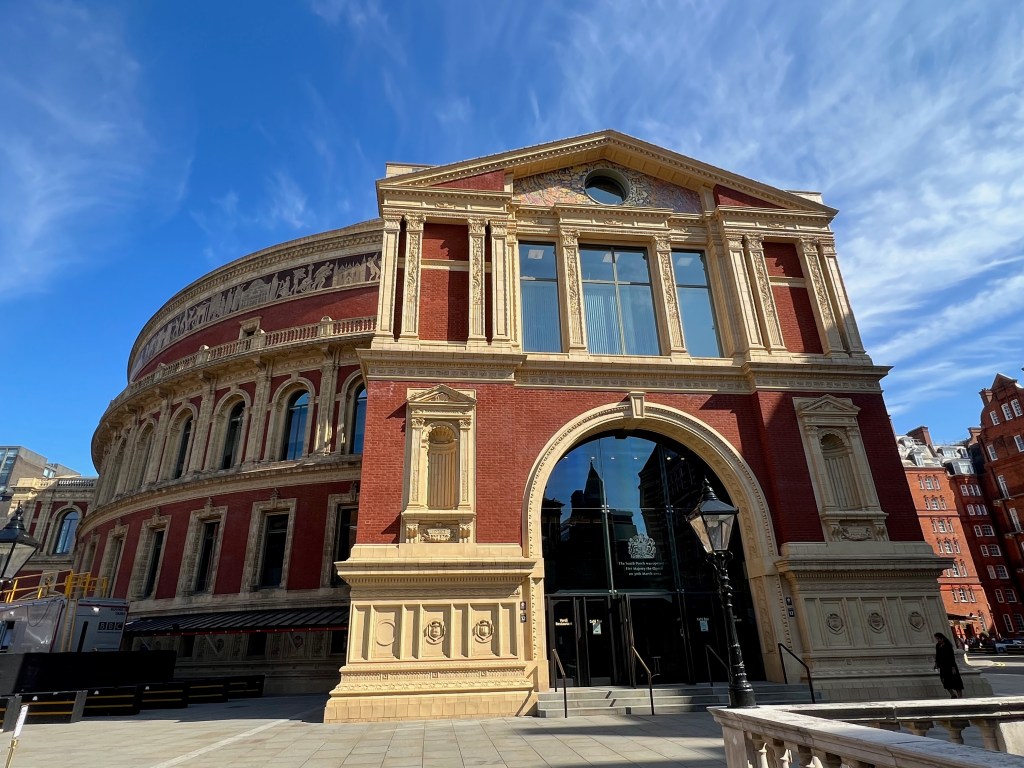
In part because of the pressure of his work as a concert pianist and in part because of the agonies he often felt in actually composing, Sergei Rachmaninov’s output is relatively small given his lengthy career as a composer. As a consequence the amount of music he wrote suitable for a choir like the Hallé Choir to sing is limited. The Hallé performance archive shows that couple of sections from his Vespers and the Hymn to the Cherubim from his Liturgy of St John Chrysostom have been sung at Christmas concerts. Most recently, earlier this year the choir performed his Spring cantata in their first concert with Mark Elder in his new role of Conductor Emeritus.
The only other Rachmaninov work that the choir have performed is his choral symphony The Bells, written in 1913, not long before the composer’s exile from Russia following the revolution in 1917. The work is a setting of the poem of the same name by Edgar Allan Poe in a Russian translation by the poet Konstantin Balmont. In each of the four movements a different type of bell is featured. In contrast to works by, say, Gustav Mahler, whose works can take one on a journey from darkness to light, The Bells goes on a journey in the opposite direction. Thus we start in the first movement with joyful sleigh bells and move through wedding bells in the second to the ‘alarum’ bells of war and funeral bells in the last two movements. The third movement is very much a tour de force for the choir to rank alongside the Scherzo of Vaughan Williams’ Sea Symphony.
Up to 2023 the choir had performed The Bells on three occasions, the last being a performance with Mark Elder in 2005. The first performance, conducted by Hamilton Harty in November 1929, formed part of a meaty all-choral concert that must have left the choir exhausted, as it also included Harty’s own The Mystic Trumpeter, Kodály’s Psalmus Hungaricus and Dvořák’s Te Deum. The reviewer in the Manchester Evening News was not impressed, describing The Bells as ‘a strange composition with a stranger admixture of styles’. Though the choir would probably have been singing in the English translation that had been prepared earlier that decade (a translation of a translation!), he wrote that ‘the Hallé Chorus accomplished some fine feats in the way of making noise but the articulation, especially in “The Bells,” was unbelievably bad.’ Neville Cardus, writing in the Manchester Guardian, was equally dismissive of the work, perhaps echoing a general perception at the time that Rachmaninov’s music was behind the times: ‘perhaps we have outgrown the romanic suggestiveness of bells, bells, bells nowadays. Perhaps, too, we have outgrown the Byronic attitude so often struck in the music of Rachmaninoff.’ Hopefully the 2023 performance would be better received!
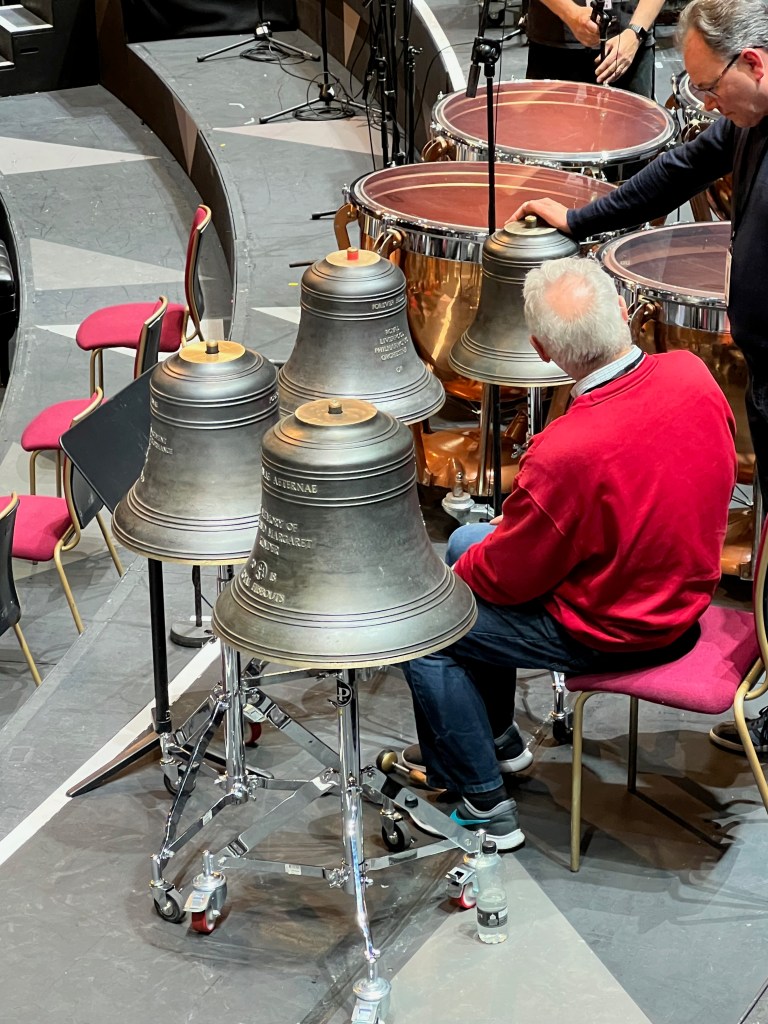
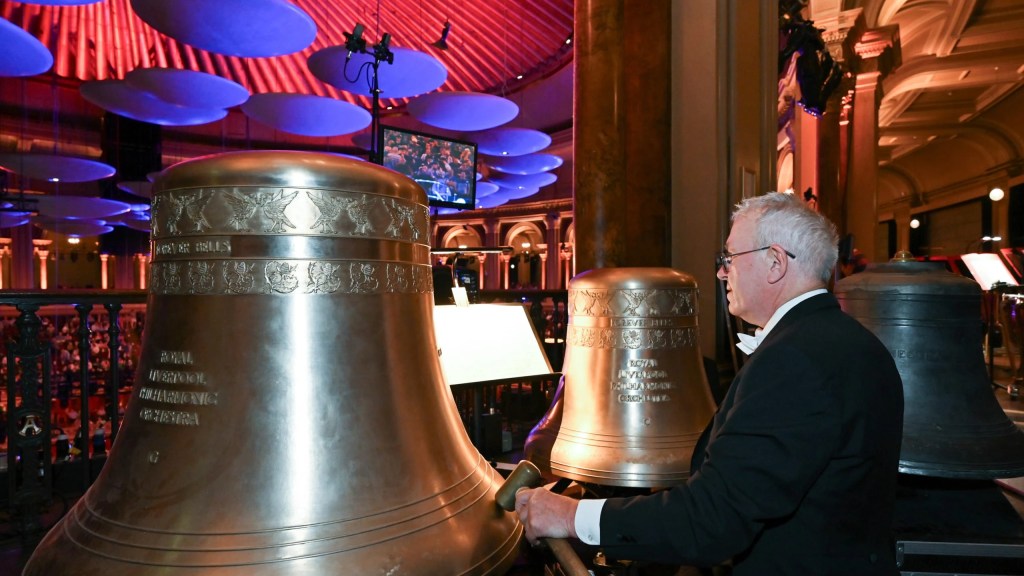
The omens were not especially good. The choir had had a busy spring and early summer, including performances of all of the three great Elgar oratorios over the course of two weekends. The concert would not as would normally happen be preceded by a performance in Manchester, and the choir would only have six weeks to learn what is a complex piece made more complex by being in Russian. The concert would also take place only a few months after the Russian invasion of Ukraine when the thought of performing a piece in Russian, albeit one composed at the tail end of the Tsarist era, might be thought to be problematic, though such worries were allayed somewhat by the news that two of the soloists would be Ukrainian. Finally, they would be joined for the first time by the singers of the BBC Symphony Chorus (who the choir had replaced for the 1981 Last Night performance), and though the Hallé Choir had an orchestral rehearsal in Manchester before leaving for London, they would only be meeting the BBC chorus for the first time for the orchestral rehearsal in the Albert Hall on the afternoon of the concert. On the plus side, the orchestra would include the Royal Liverpool Philharmonic Orchestra’s wonderful set of church bells known as the ‘Forever Bells’.
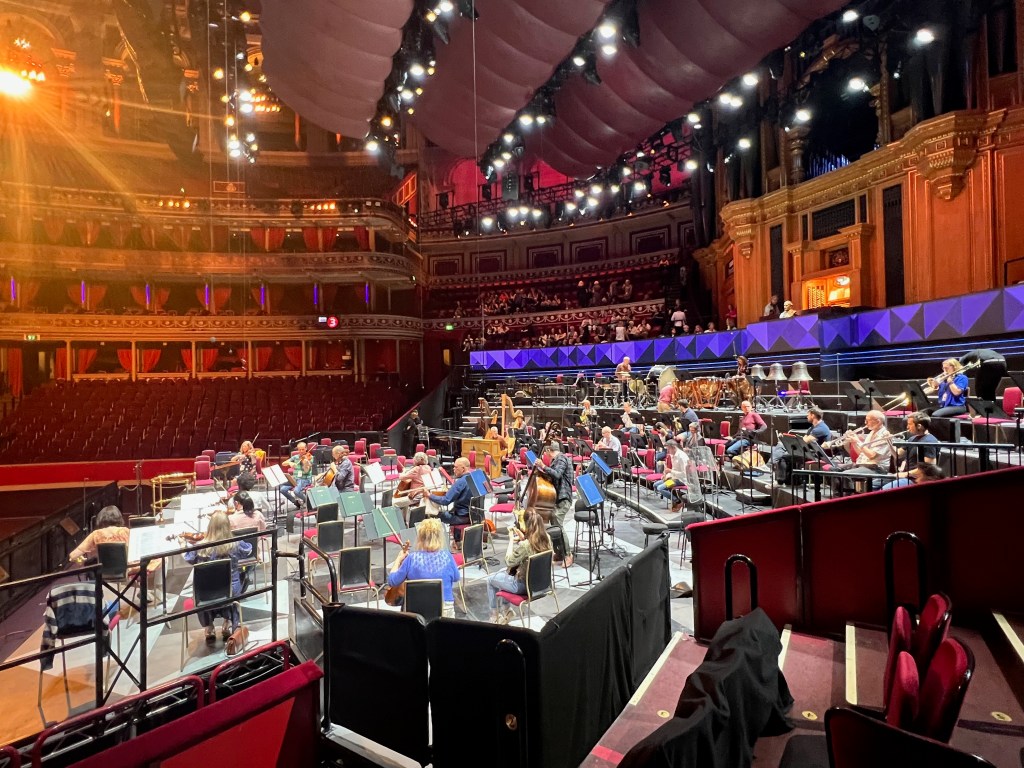
As it happened, the final rehearsal was somewhat fraught, with the upshot being that there was more nervousness than usual as the concert itself approached, nervousness that evaporated as soon as the music started. Speaking personally, I would say that the performance was one of the highlights of my career with the Hallé Choir, a feeling reflected in the reviews of the concert that followed.
Flora Wilson, writing a 5-star review in The Guardian, saw both precision in the performance and something more: ‘Precision isn’t everything, of course. But after more than two decades with Elder as music director, orchestra and conductor seemed last night to think, breathe, feel as one.’ She was effusive about the soloists, all excellent, but if one harks back to that first performance of The Bells her final comment on the piece was especially gratifying: ‘The chorus itself was excellent throughout, their diction clear, their entry in the third movement big-boned and bullish.’
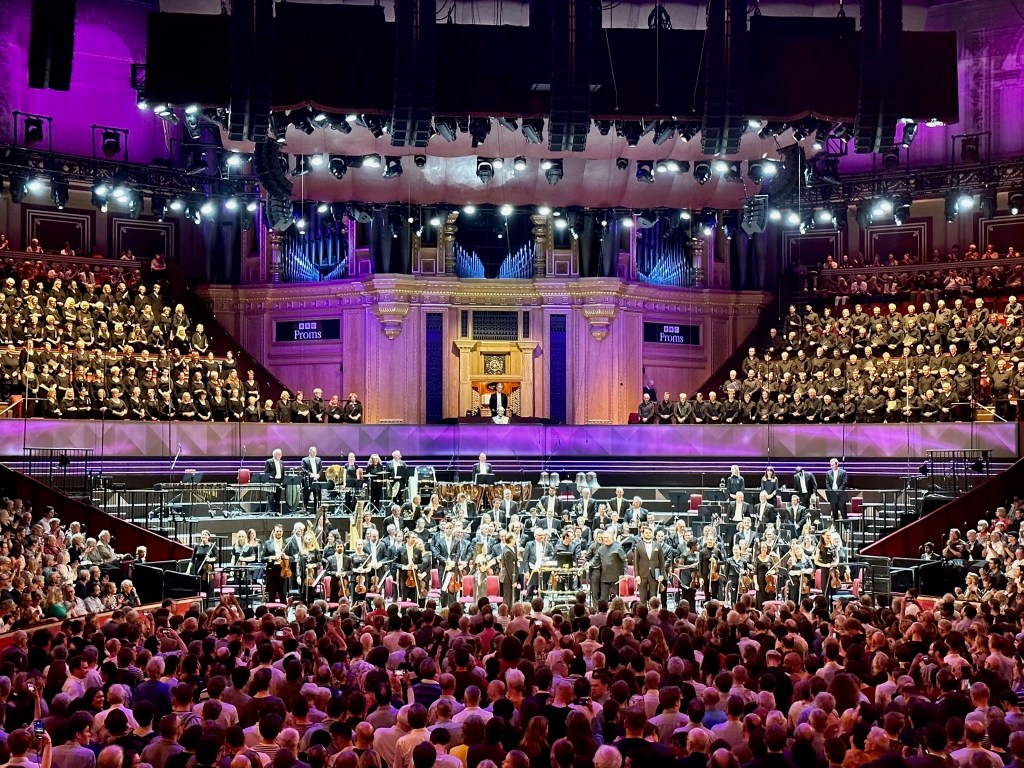
Robert Hugill’s Planet Hugill online review saw something of note in the choral sound in each of the four movements. In the first ‘there was much to admire in the way the large chorus produced such controlled, lightly tripping sounds’, and in the second ‘the choir’s entry was haunting and sober, contrasting with the radiant soprano of Mané Galoyan’. In the fast-paced third movement he ‘loved the way the chorus spat the words out in the quieter sections’, and noted the ‘terrific control’ both orchestra and choir exhibited throughout. In the final movement ‘Andrei Kymach’s dark, vibrant baritone rung out over a web of magical sounds from orchestra and choir’.
Finally, an early paragraph in Marc Bridle’s review in Opera Today is worth quoting in full, showing how through a measure of adversity that would have been unknown to the reviewer, something truly special resulted:
There was, I think, something very organic, very symphonic about Mark Elder’s performance of this work. It was certainly, for example, extremely tightly conceived; it was so well balanced between the choral and orchestral elements it felt distinctly woven together. I sometimes get the impression when I listen to The Bells of hearing the orchestra one moment, the chorus the next – but without any sense of the two melting together to form a singular sound. This was not the case here and this was why the performance was of such spellbinding quality.
From a review by Marc Bridle in Opera Today, July 2023
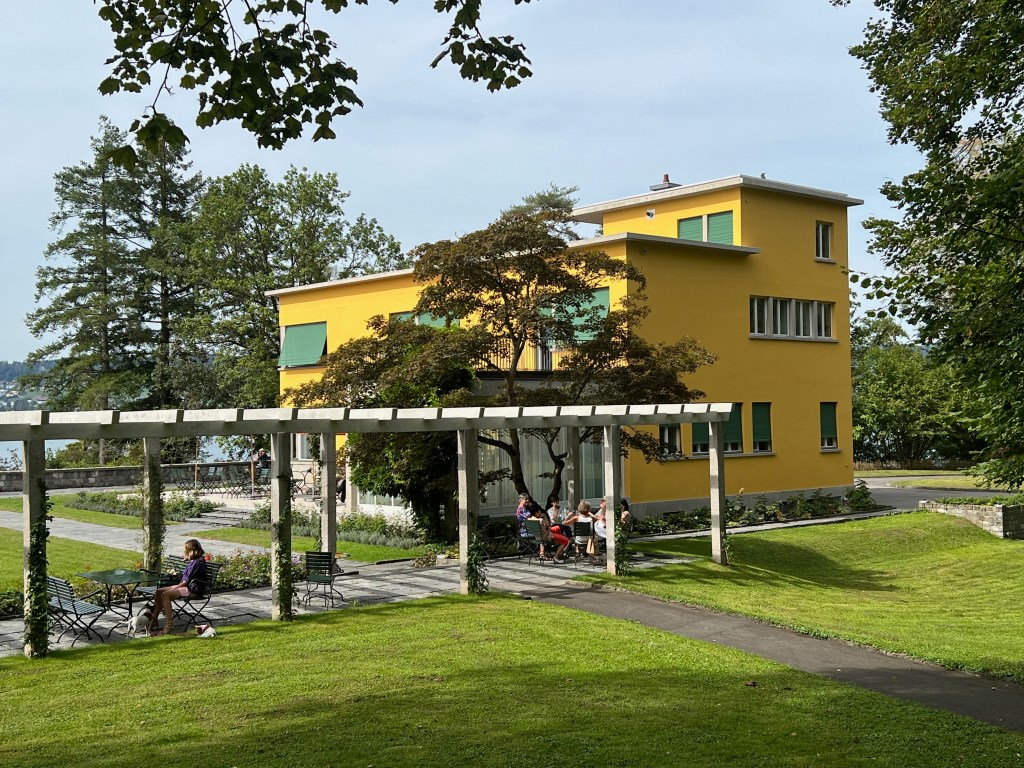
I would add a brief personal postscript to this concert. The following month, August 2023, I was holidaying in the Swiss resort of Weggis on the shores of Lake Lucerne. A couple of miles along the shoreline, in the small village of Hertenstein, stands the Villa Senar, a striking modernist house built for Rachmaninov when he and his wife were living in Switzerland in the 1930s before their final exile to the USA. The name ‘Senar’ was concocted by Rachmaninov to represent himself and his wife – SErgei and NAtalia Rachmaninov. On my last day in the area I visited the house on one of its rare open days. I was sitting in the small café and someone nearby was playing a recording of the famous 2nd Piano Concerto on their smartphone. Normally, such a thing would have annoyed me but here it just seemed right. Not wishing to be quite such an exhibitionist I took myself down to the boathouse on the shores of the lake and played the recording of the choir’s performance of The Bells from the previous month, not too loud of course but loud enough to create a magical effect. I felt at one with Rachmaninov.
2024: James MacMillan – Timotheus, Bacchus and Cecilia
In my post about the impact Mark Elder had on choral singing within the Hallé family, I mentioned how the Hallé were to mark his final Manchester concert as chief conductor with a performance of a new commission from the esteemed Scottish composer Sir James MacMillan entitled Timotheus, Bacchus and Cecilia. This was in fact a co-commission with the Cincinnati Symphony Orchestra who gave the premiere of the work in 2023 under the former BBC Philharmonic conductor Juanjo Mena. The performance in May 2023 would be the UK premiere alongside a performance of Mahler’s 5th Symphony, and such was the demand for tickets in Manchester that an extra performance was scheduled. In the end both performances sold out.
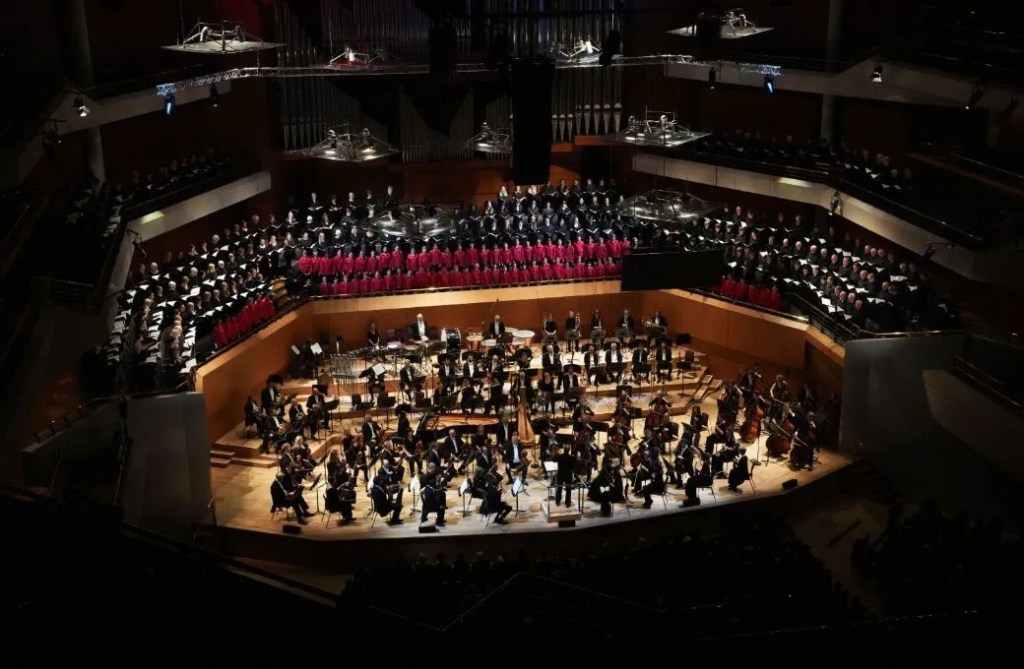
Timotheus, Bacchus and Cecilia was a setting of words from John Dryden’s late 17th century poem Alexander’s Feast, which also provided the source for Handel’s 1736 oratorio of the same name. It was intended by MacMillan to be a celebration of the power of music, referencing three characters in the poem: Timotheus, the bard of Alexander the Great who would glorify his patron in words and music; Bacchus, the Roman god of amongst other things, wine, fertility and theatre who would express himself through music and dance; and Cecilia, the patron saint of music and musicians, for whom music was simply a means to praise God. At the behest of Mark Elder, as I explained in the previous post, MacMillan also deliberately wrote the piece to feature all three of the main strands of the Hallé choral offering, the Hallé Choir itself, the Hallé Youth Choir and the Hallé Children’s Choir.
The piece was an immediate hit with the Manchester audiences, as evidenced by the online Bachtrack review by Rohan Shotton that compared Elder’s departure with James Anderson’s imminent departure from the England Test team! After describing the genesis of the piece he went on to write the following, concentrating especially on the ecstatic finale of the piece as St Cecilia’s vision of music gains the upper hand:
This set the stage for a joyful celebration of the whole Hallé family of choruses, with ranks of singers practically bursting out of the choir stalls. The musical arc represented a compelling crystallisation from early hazy textures and rich harmonies to triumphant finale. The last pages brought forth a gargantuan choral sound in joyous unison, horns raised aloft and tam-tam ringing. No doubt a crowd-pleaser.
From a review by Rohan Shotton on Bachtrack
He concluded by predicting that ‘Timotheus will surely raise the roof at this summer’s BBC Proms’, and indeed the Hallé were due to repeat the concert with the same forces at the Proms at the end of July.
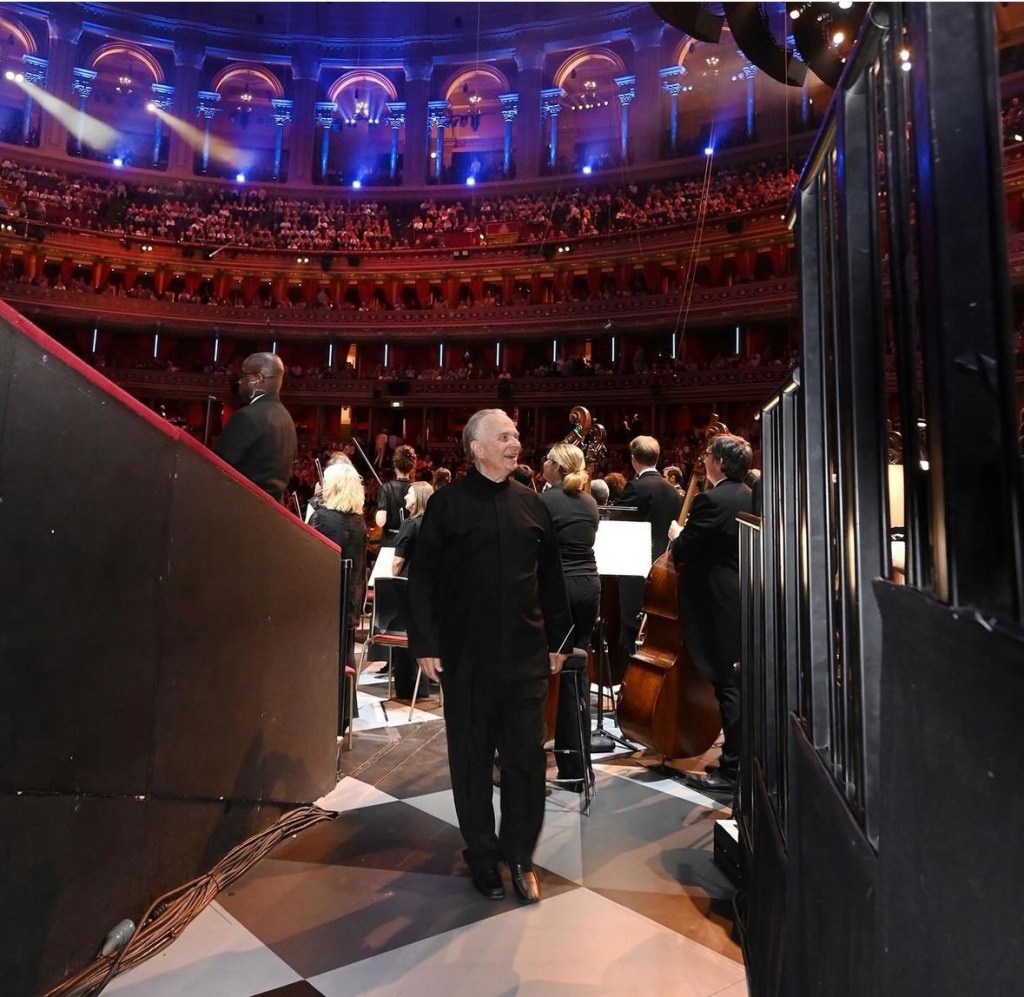
Before going on, I have to interject another personal note at this point. On the Monday before the first performance of Timotheus in Manchester I was attending a performance of Christopher Wheeldon’s The Winter’s Tale given by the Royal Ballet in the Royal Opera House. On coming down the stairs at the end I tripped on the bottom stair and ruptured the quadriceps tendon in my right knee. This required immediate surgery once I managed to get back up north meaning that I had to miss both of the Manchester performances. However, after the initial disappointment had worn off, I calculated there was just enough time for me to get a point in my rehabilitation that would enable me to get down to London and participate in the Prom. Within a week of my operation I was walking a couple of miles a day on my crutches and by the end of July I felt ready. July 21st saw me on the coach heading down to the Albert Hall – I had made it!
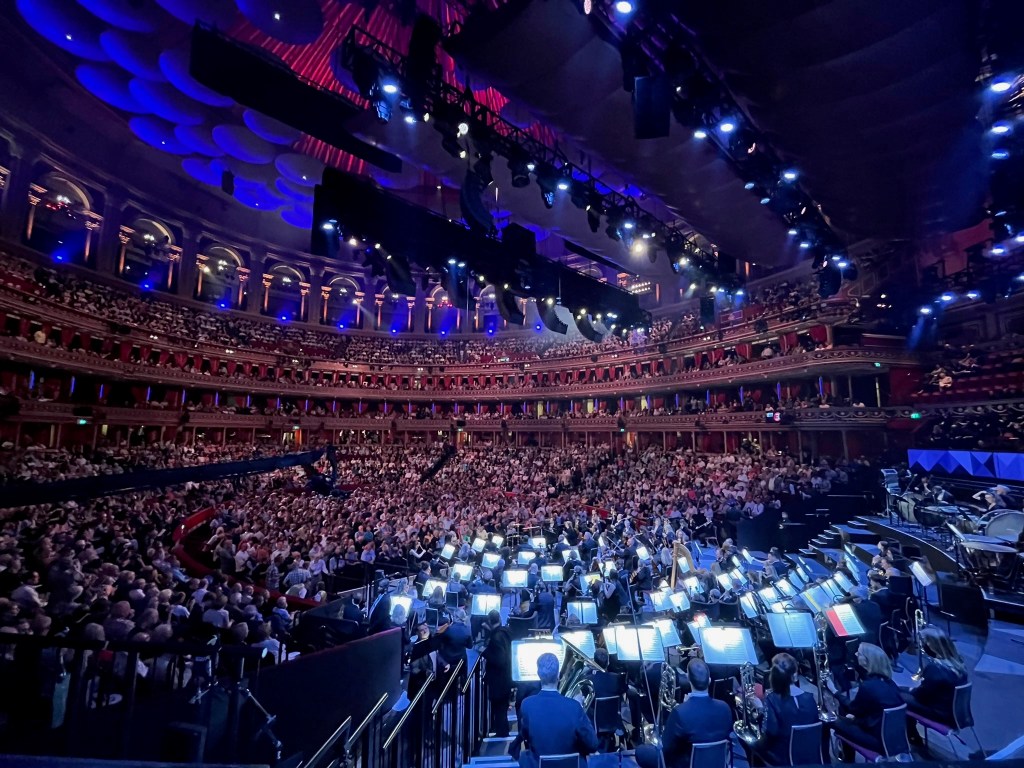
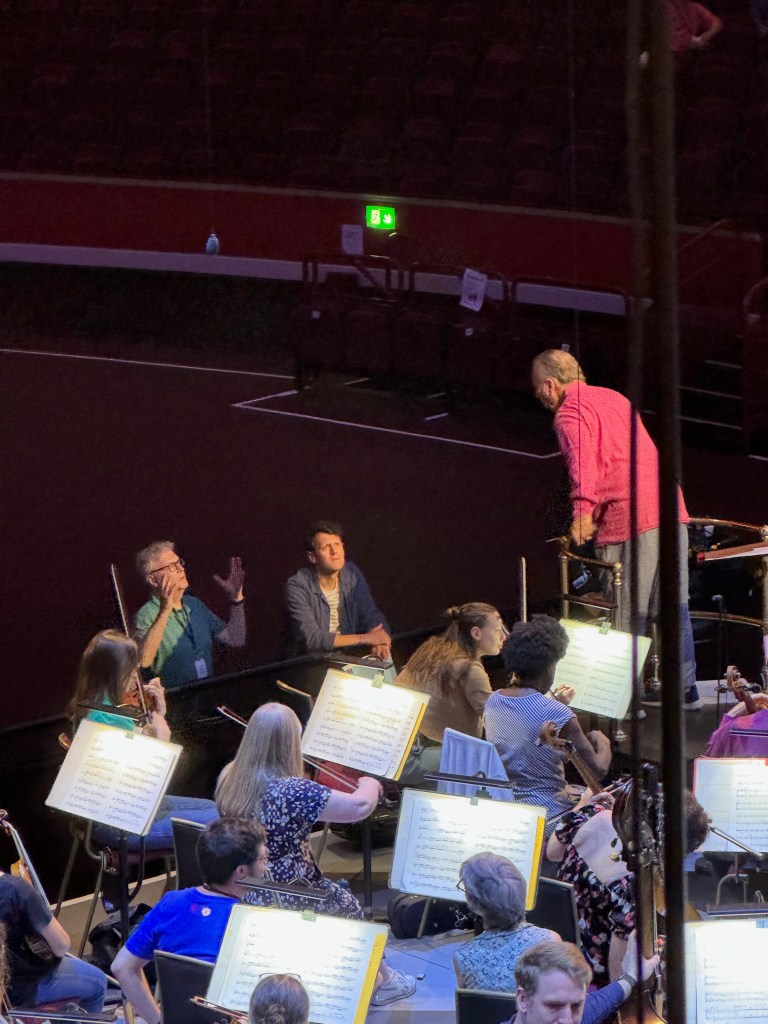
During the Mark Elder era, apart from the Debussy performance in 2018 when a small female chorus from the Hallé Choir and Hallé Youth Choir performed, the Hallé had always invited other external choirs to bolster the Hallé Choir for their Proms performance, choirs such as the London Philharmonic Choir, the Manchester Chamber Choir or the BBC Symphony Chorus. For this performance all of the performers on the stage were from the Hallé, a point emphasised by many of the reviews. The concert was also being broadcast live on BBC television, so the pressure, as for the previous year, was most definitely on.
Judging by the audience reaction, the piece had the same effect the London audience as on the Manchester audiences (though no doubt part of that was due to many of the audience having travelled down from the North!). Martin Kettle’s review in The Guardian made great play of Mark Elder’s choral success in Manchester: ‘One of Elder’s many achievements in Manchester has been to build and sustain the Hallé’s choirs, integral to the memorable Elgar choral works that have provided some of Elder’s milestone events.’ Describing the work as ‘a no-holds-barred hymn to music’ he thought it ‘an impressive conception, which built to huge ensemble moments, for which the Albert Hall is a perfect venue’.
Richard Morrison’s review for The Times emphasised the grandeur of the piece, especially in the orchestral writing and made special note of Elder’s choral achievements in his special praise for the Children’s Choir:
For the separate choirs the writing is wonderfully crafted but there’s also something fierce and primordial about the otherworldly orchestral effects. The ending in particular is ecstatic in mood and almost frenzied in its impact.
To hear such polished singing coming from the children especially must have been immensely cheering for Elder. His Mancunian years may be over but his impact on the city’s musical life will continue long after he has gone.
From Richard Morrison’s review in The Times, July 22nd 2024
A somewhat bathetic note was struck by Richard Lawrence’s review in the Church Times. Whilst he praised ‘sterling work by the orchestra and three Hallé choirs, his only comment of substance was to criticise the way the name Timotheus was set by MacMillan: ‘“Timotheus” is pronounced like “Prometheus”, preferably with a long “i”. The composer turned it into four syllables: did he not look at the scansion, or listen to Alexander’s Feast, Handel’s setting of the same words?’
On a more positive note, it is worth quoting Chris Kettle’s online review in Seen and Heard International, as I think it gets to the heart of both the piece and of the occasion:
Sir James MacMillan’s recent Timotheus, Bacchus and Cecilia – a rather cumbersomely-titled celebration of the power of music, to words from Dryden’s Alexander’s Feast – was an ideal and substantial launchpad for this inspiriting concert. At almost 20 minutes it is no mere curtain-raiser; beginning with whirrings and tappings in the large orchestra, the music at once demonstrates MacMillan’s direct and instinctive feeling for drama: ironclad brass fanfares with marauding tuba give way to the affecting sound of an unaccompanied children’s choir, and it isn’t long before the first, thrilling tutti for the combined choirs. The choral sound was clean, bright and magnificently disciplined; the use of the children’s choir as a separate, often declamatory element of the texture was brilliantly effective.
The first section presents Timotheus, musician to Alexander the Great, depicting the king’s god-like power that ‘seems to shake the spheres’. After the magnificence of this opening the music darkens for Bacchus: where Dryden seems content to celebrate the unruly energy of victorious soldiers – Sound the trumpets (six of them), beat the drums! – Macmillan suggests other things, all too familiar from our News sources (in his programme note he references ‘the greed of the looting soldiers, who have lost all control in their thievery, slaughter and destruction’). Chords from deep in the piano’s bass register power a sinister march; shrill woodwind cries seem freighted with something more desperate than Now give the hautboys breath; men’s voices sink down sepulchrally on ‘Sweet is pleasure after pain’, grounding on ‘pain’.
Bright, passionate violins and woodwind bring us up and into the light again for Cecilia; there were ethereal sounds from the choirs as well as bells, drums and blazing affirmation, and a final dramatic stroke: a single, quiet choral chord.
In a performance such as this – high, wide and handsome in the hall’s vast spaces – MacMillan’s piece has an impact comparable to that which a performance of Mahler’s Eighth Symphony can achieve here. Sir Mark drove his forces splendidly: I doubt if I will hear anything more stirring in this Proms season.
From Chris Kettle’s review in Seen and Heard International, 23rd July 2024
2025: Mahler – Symphony No. 2 (“Resurrection”)
Exit Mark Elder, and then of course in season 2024/25 enter Kahchun Wong. In my last post I described the genesis of the first recording the choir made with the Hallé’s new chief conductor, based on a performance of Mahler’s Resurrection symphony in January 2025. Given Kahchun’s strong Mahler credentials prior to joining the Hallé this work was an obvious choice for his first appearance at the BBC Proms with his new orchestra later in 2025.
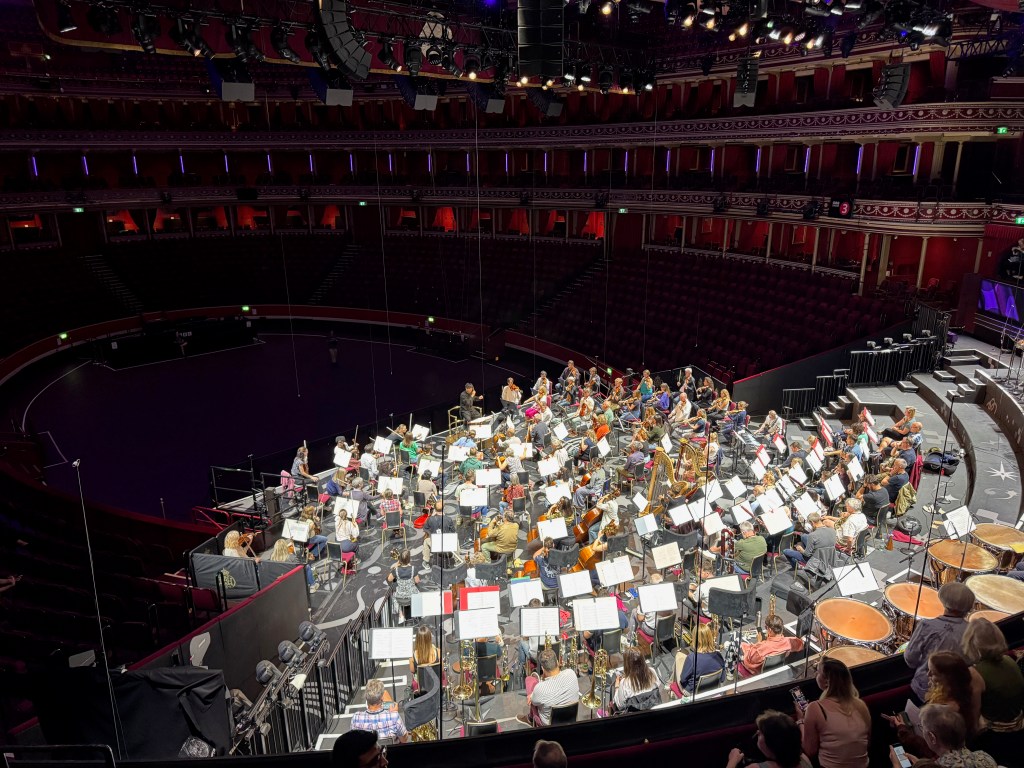
Therefore, on August 2nd of that year the Hallé Choir and the Hallé Youth Choir reassembled at the Royal Albert Hall to repeat the January performance, albeit with new soloists, the Norwegian soprano Mari Eriksmoen and the exciting young Canadian mezzo Beverley D’Angelo having replaced Masabane Cecilia Rangwanasha (who had given birth to her first child in July) and Sarah Connolly. As previously stated, thus the Hallé Choir performed at the Proms for an unprecedented fourth successive year, and for the second year running all of the choristers came from within the Hallé family. Also reappearing after being heard in The Bells in 2023 were the RLPO’s Forever Bells to add their lustre to the symphony’s final pages from a position high up in the gallery of the Albert Hall.
How this performance compared to the January one is difficult to say, especially since the two new soloists gave the final movement a very different dynamic, but as with the MacMillan piece the previous year, it was received just as enthusiastically by the audience in the Royal Albert Hall as it had been in Manchester.
The critics were largely enthusiastic, but there were some dissenting voices. Marc Bridle’s review in Opera Today was headlined ‘An Unremarkable Mahler Resurrection from the Hallé and Kahchun Wong’. There were elements he liked, such as the Andante second movement, and he felt the final movement in which the choir finally appears was ‘largely a success’ especially ‘the hushed chorale opening magically from the Hallé Choir and the Hallé Youth Choir’, but he wasn’t happy with strength of voice of either of the soloists and thought the performance too ‘micromanaged’.
In contrast Flora Wilson’s review in The Guardian was headlined ‘New conductor commands an utterly gripping performance’! Where Bridle complained about micromanagement she praised the fact that ‘conducting without a score, Wong maintained ultraprecise coordination across the cavernous Royal Albert Hall’. The following passage from the review certainly seemed to reflect the reaction the performance had in the hall:
A full hour into the performance, the nose-to-tail Prommers stood as if transfixed, even before the Hallé Choir and Hallé Youth Choir entered with their first unaccompanied passage – minutely blended and astonishingly quiet. In the symphony’s final minutes, with an organ pedal that vibrated through the floor, catastrophically powerful lower brass and bells pealing from the gallery, Wong ditched his baton and manoeuvred his supersized forces with tremendous, muscular arm sweeps, as if single-handedly hauling an ocean liner into dock. Many sprang to their feet with the final chord still ringing.
From Flora Wilson’s review in The Guardian, 3rd August 2025
That review elicited 4 stars from the reviewer. Barry Creasy’s online review for musicOMH gained 5 stars. Commenting on this being Kahchun’s debut at the Proms with the Hallé and him having ‘big shoes to fill’, he declared ‘if his Proms debut on Saturday evening with the orchestra and its associated choirs (Hallé Choir and Hallé Youth Choir) was anything to go by, the footwear fit perfectly, and we can look forward to a future of stunning and memorable performances’. Following detailed comments on the first four movements he turned his attention to the choir:
And here we must mention the 270 or so members of the Hallé choral battalion. They don’t get much to do in the work, but they made what they did count. Their opening ‘Aufersteh’n’ was utterly magical, delivering sonority, diction, and perfect blend within the tiniest of dynamics. Singing off copy, they trod the ups and downs of the texture and volume of their material with assurance, to end in the magnificent shout of elation that is the crowning glory of the symphony.
From Barry Creasy’s review for musicOMH, 4th August 2025
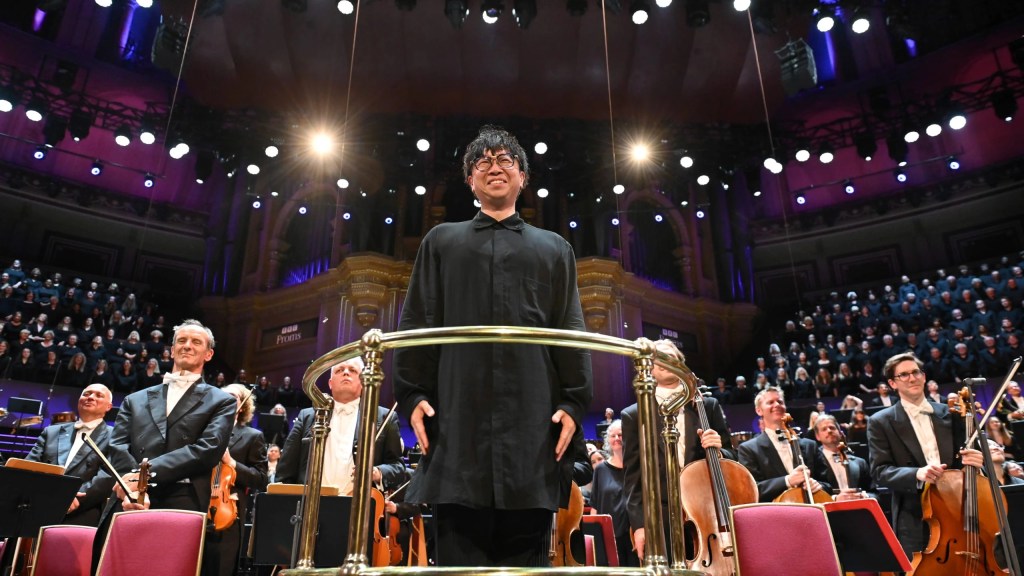
Thus Kahchun’s Proms career with the Hallé was launched, with the Hallé choirs very much involved. Whilst in 2026 the choirs will not be involved he will return to the conduct the orchestra on the 5th August with a mixed programme culminating in another second symphony, this time by Rachmaninov.
When the Hallé Choir will return to the Royal Albert Hall is currently not known, but I hope this post and its predecessor give an idea of the impact the choir has had on the event nearly 100 years after its debut at the Northern Proms and nearly 50 years after its debut at the Royal Albert Hall Proms. The number of times the choir has appeared with the orchestra at the Albert Hall, especially compared to the choirs of other provincial symphony orchestras, is surely a testament to the faith both the Hallé Concerts Society and the BBC put in the choir to perform at the highest level. Long may that faith continue.
References
Manchester Evening News review of The Bells from British Newspaper Archive britishnewspaperarchive.co.uk
Neville Cardus review of The Bells from The Guardian archive courtesy of Manchester Libraries
Mark Bridle, ‘Mark Elder and the Hallé: a superlative Russian Prom of gripping power and intensity’, Opera Today, July 2023. https://operatoday.com/2023/07/mark-elder-and-the-halle-a-superlative-russian-prom-of-gripping-power-and-intensity/
Mark Bridle, ‘Proms 2025: An Unremarkable Mahler Resurrection from the Hallé and Kahchun Wong’, Opera Today, August 2025. https://operatoday.com/2025/08/proms-2025-an-unremarkable-mahler-resurrection-from-the-halle-and-kahchun-wong/
Robert Hugill, ‘Prom 16: Sir Mark Elder & the Hallé in Rachmaninoff’s The Bells & Shostakovich’s Symphony No. 5’, Planet Hugill, 27th July 2023. https://www.planethugill.com/2023/07/prom-16-sir-mark-elder-halle-in.html
Chris Kettle, ‘A spectacular Proms finale for Sir Mark Elder at the helm of the Hallé’, Seen and Heard International, 23rd July 2024. https://seenandheard-international.com/2024/07/a-spectacular-proms-finale-for-sir-mark-elder-at-the-helm-of-the-halle
Martin Kettle, ‘Prom 4: Hallé/Elder review – a farewell eclipsed by the quality of the music-making’, The Guardian, 22nd July 2024. https://www.theguardian.com/music/article/2024/jul/22/prom-6-halle-orchestra-and-choirs-mark-elder-review
Richard Lawrence, ‘Music review: BBC Proms 2024 season’, Church Times, 20th September 2024. https://www.churchtimes.co.uk/articles/2024/20-september/books-arts/music/music-review-bbc-proms-2024-season
Richard Morrison, ‘Proms Review’, The Times, 22nd July 2024. Courtesy of Tony Flynn
Kenneth Shenton, ‘Hallé review – magnificent, massive and melting Mahler at BBC Proms’, musicOMH, 4th August 2025. https://www.musicomh.com/classical/bbc-proms-reviews/halle-review-mahler-bbc-proms-royal-albert-hall
Flora Wilson, ‘Hallé/Wong review – new conductor commands an utterly gripping performance’, The Guardian, 3rd August 2025. https://www.theguardian.com/music/2025/aug/03/halle-wong-review-new-conductors-first-proms-appearance-is-utterly-gripping
Flora Wilson, ‘Prom 16: Hallé/Elder review – orchestra and conductor seem to think, breathe and feel as one’, The Guardian, 27th July 2023. https://www.theguardian.com/music/2023/jul/27/prom-16-halle-elder-review-rachmaninov-shostakovich


Leave a comment