Introduction
Over the course of writing this blog I have posted at length about the Hallé Choir’s relationship with recorded and broadcast media, namely their appearances on radio and television and in the BBC Proms, and their many recordings on vinyl, CD and streaming. However, time moves on and since those posts there have been many additions to the choir’s canon, and so over the course the next few posts I will chronicle those additions, starting with the three new recordings released during the course of 2025, all on different labels, all with different orchestras.
2025 – Shostakovich: Symphony No. 3 ‘The First of May’
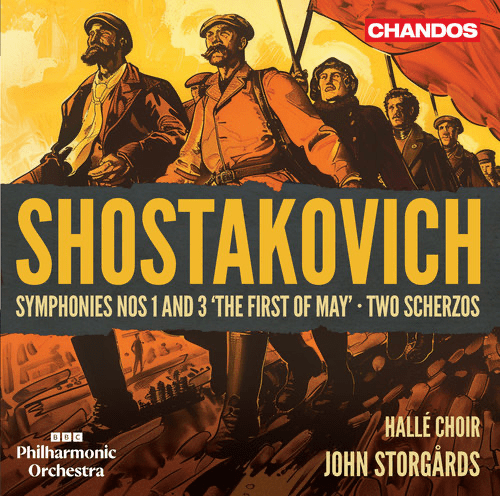
As I described in Part 2 of my post about the choir’s radio appearances, over the years the Hallé Choir has performed many times over the years with BBC performing ensembles, beginning with the BBC’s Manchester station orchestra and then continuing with the BBC Northern Symphony Orchestra and the BBC Philharmonic (as that orchestra was renamed in 1982). The choir has even appeared at the BBC Proms with the BBC orchestras, most notably with the BBC Symphony Orchestra at the Last Night of the Proms in 1981 and most recently singing Beethoven’s Missa Solemnis with the BBC Philharmonic in 2016.
However, up until 2023 and the release of the recording of Emily Howard’s The Anvil that I chronicled in this post, the choir had never appeared on any recording with a BBC orchestra (though to be fair the choir’s contribution to the soundtrack of Mimi and the Mountain Dragon with the BBC Philharmonic in 2019 was released on streaming services). The Anvil recording was a slightly accidental release, being taken from a radio broadcast made four years previously of a concert to commemorate the 200th anniversary of the Peterloo Massacre. One could argue, therefore, that the choir’s first planned physical recording with the BBC occurred a year later in May 2024 when the choir assembled at the BBC Philharmonic’s studio at Media City in Salford to record the final choral movement of Dmitri Shostakovich’s third symphony.
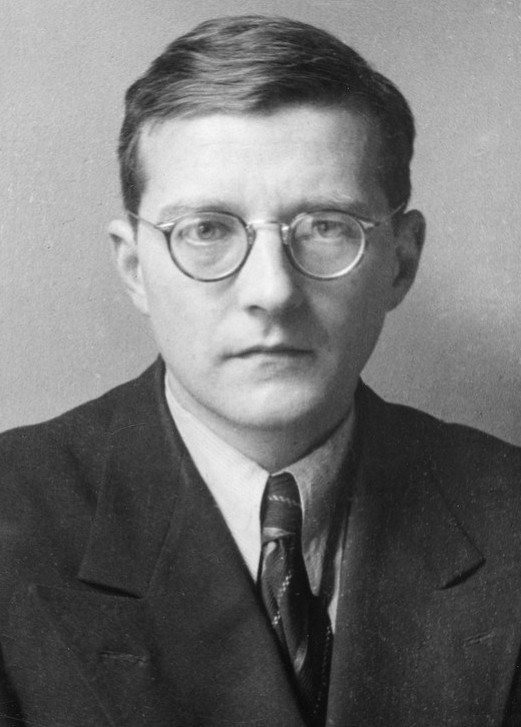
Born in Tsarist Russia in 1906. Shostakovich learned his trade as a composer in post-revolutionary Soviet Russia, and as is well documented, most chillingly in Julian Barnes’ 2016 fictionalised account of his life The Noise of Time, throughout his career he struggled to maintain his artistic integrity in the face of state restrictions, diktats and purges. As Barnes relates in his book, after the critical savaging of his opera Lady Macbeth of Mtsensk in 1936 that was instigated by Stalin, for many years he keep a packed suitcase by his front door, expecting the authorities to come at any time to whisk him away to one of the gulags, or worse. That he managed to keep his individual voice throughout his many his long composing in the face of such pressure is nothing short of miraculous.
His Symphony No. 3, subtitled The First of May, was written in 1930 when he was still only 24. It comes from the end of that period in Soviet history immediately after the revolution when everything seemed possible, when new artistic ideas flourished and a composer like Shostakovich was relatively free to experiment with techniques such as serialism, before Stalinist ideas of rigid ‘Socialist Realism’ took hold in the 1930s. Indeed, though the symphony had its first performance in 1930, it was soon dropped from the repertoire and only revived in the 1960s, and his next symphony was completely abandoned following the furore around Lady Macbeth, and did not get its first performance until 1961.
While still containing elements of his early youthful experimentation, the third symphony shows signs of the more rigid political constraints being imposed on composers, not least in its final section, a choral setting of Semyon Kirsanov’s poem The First of May, a celebration by the poet of International Workers’ Day. Like The finales of many of Shostakovich’s symphonies from this point onwards, it bore little relation to what preceded it and seems partly designed to please the powers-that-be that would pass judgement on the piece and send them home happy. In his sleeve notes for the choir’s recording, Dave Fanning quite aptly talks of ‘the tub-thumping final chorus’.
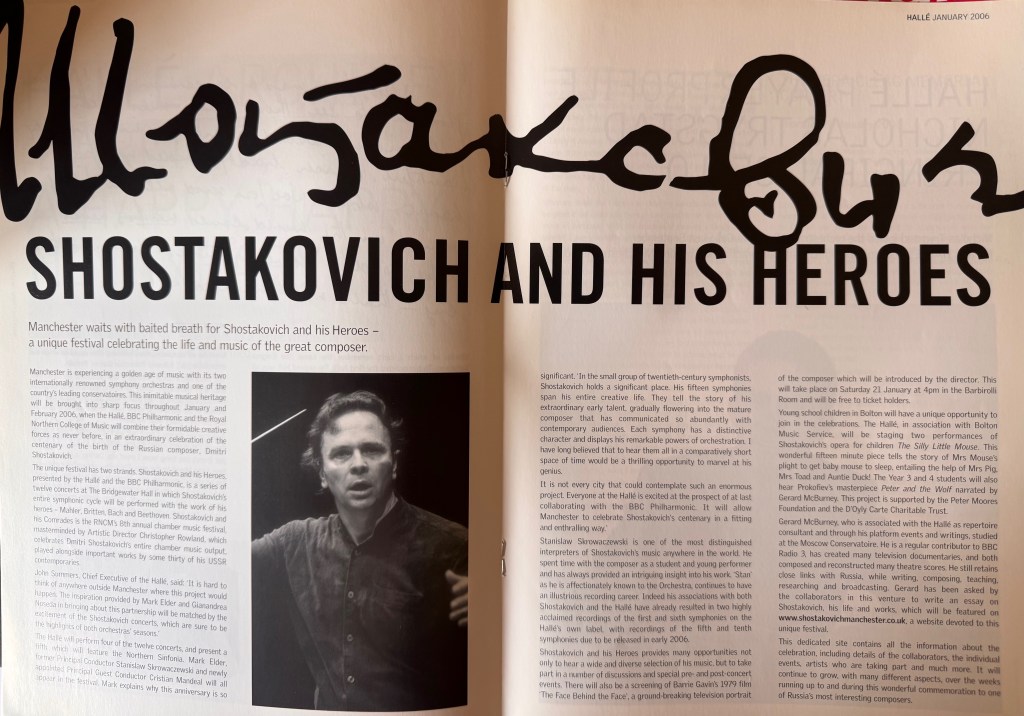
At the time of recording the symphony the choir had had surprisingly little exposure to Shostakovich’s choral music, especially the three choral symphonies, only performing the first two, Nos. 2 and 3, on successive Thursdays in February 2006 with Mark Elder as part of a joint Hallé/BBC Philharmonic celebration of Shostakovich’s music in his centenary year.
These remained the Hallé Choir’s only performances of music by Shostakovich until they were invited to contribute in May 2024 to the BBC Philharmonic’s ongoing project to record all of Shostakovich’s 15 symphonies under their recently appointed Finnish chief conductor, John Storgårds. Thankfully, given the choir had just completed the mammoth assignment of performing Elgar’s three big oratorios with Mark Elder over two weekends in the Bridgewater Hall and had minimal time to prepare, they were able do a dry run for the recording in the form of a concert performance in the Bridgewater Hall on Saturday May 18th. This performance, part of a spring-themed concert conducted by Storgårds, was broadcast on Radio 3 and I will cover it in a bit more detail in a future post when I update the choir’s radio performances.
The very next day the choir assembled at Media City to record their contribution to the symphony in more controlled studio conditions. As essentially a studio orchestra, the BBC Philharmonic are used to such recordings, but the choir were by now used to their recordings being made from a mixture of live recording and rehearsal takes, their last proper studio recording of a substantial piece being their recording of Colin Matthews’ Aftertones a decade earlier. Although the choral element of the symphony lasts less than five minutes, the singing is full on, ‘tub-thumping’ even! The many takes required to provide a satisfactory performance, combined with the rehearsal and performance the previous day in the Bridgewater Hall proved exhausting for the choir but what emerged seemed to be a suitable dramatic and committed rendering.
Andrew Clements, writing in the Guardian, seemed impressed with the results when the album recording was released in the summer of 2025. While calling the second symphony, ‘some of the most radical music Shostakovich would ever compose’ he described the third as ‘distinctly less iconoclastic’, but the performance of it as one that ‘skilfully negotiates its changes of gear’. He also refers to the choral passage as ‘tub-thumping’, proving that he read the liner notes!
Russian music expert Marina Frolova-Walker, writing in the Gramphone, was more effusive in her praise of the choir. Whilst admitting the piece itself is ‘an ugly duckling that begins with modernist experimentation, then switches to brash Soviet festivities’, she wrote that ‘Storgårds invites to immerse ourselves in the experience and makes every note sound signficant’, and that ‘after the marches, polkas and orations that disturb this primordial void, the Hallé Choir give us a rousing simulation of early Soviet proletarian zeal.’
In his online review for MusicWeb International Philip Harrison was less impressed by the recording overall, calling it ‘no vintage disc’, specifically comparing it to the performances Mark Elder gave of the second and third symphonies referred to above which he regretted weren’t available on disc. However, much of what little praise he gave is reserved for the choir in a back-handed kind of way:
Finally we reach the last movement. A cold, sombre, quite extended introduction with some effects not wholly characteristic of Shostakovich leads to the final chorus: the Pervomyskaya, sung here by the Hallé Choir. It sounds as if they enjoyed their brief four minutes as revolutionary comrades; they give a vigorous account of themselves.
From Philip Harrison’s review for MusicWeb International
2025 – Elgar: The Dream of Gerontius
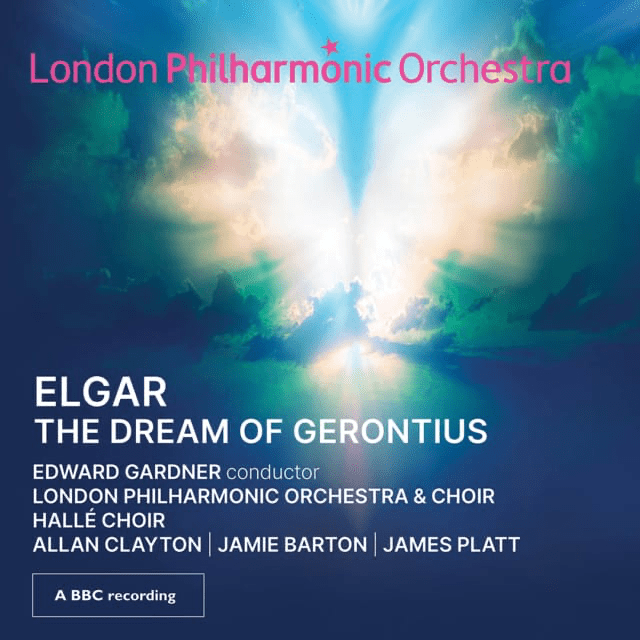
The second recording to be released in 2025 featured the work that, as I have described many times in the course of these posts, has perhaps become the one most closely associated with the Hallé Choir, The Dream of Gerontius by Edward Elgar. It would be the choir’s third recording of the oratorio, following the critically acclaimed recordings by Barbirolli and Elder. However, like the choir’s recording of the The Anvil, the release was a somewhat unexpected one. In my post about the Hallé Choir’s history at the BBC Proms (which I will be updating in my next post) I wrote about what at that time was the choir’s latest appearance at the Proms, a performance of Gerontius in late August 2022 supporting conductor Edward Gardner and the London Philharmonic Orchestra (LPO) and Choir. The Prom – with its excellent cast of soloists, Allan Clayton, Jamie Barton and James Platt – was well received but as far as the choir was concerned in 2025 it was just a memory.
However, like many orchestras, including the Hallé, the London Symphony Orchestra and the Berlin Philharmonic, the LPO had taken the decision to control what was released in their name by setting up a label to release CDs and digital releases of new and archive recordings of the orchestra. 2025 marked the 20th anniversary of the LPO label and to celebrate the occasion the orchestra released a slew of new releases in the course of the year, including recordings of Michael Tippett’s A Child of Our Time, Rachmaninov’s The Bells, and of that 2022 performance of Gerontius at the Proms. The choir had received no advance notice of release and as such it came as a rather nice surprise!
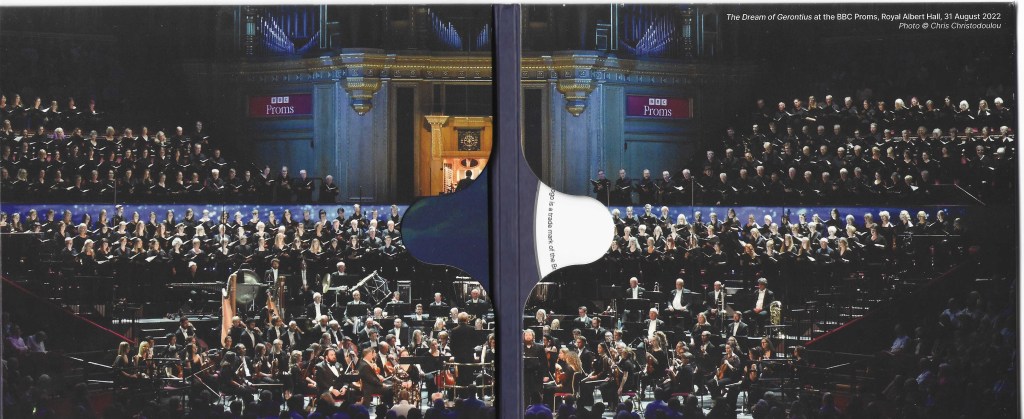
The recording itself, as was made clear on the cover of the CD, was essentially the BBC recording of the event, remastered by Andrew Walton to bring out the best of the live recording. The double CD came in a lavish digipak which opened out to display a widescreen shot of the choirs and the orchestra resplendent against the backdrop of the mighty Albert Hall organ.
Jeremy Dibble’s review of the recording in the Gramophone highlighted one feature of the performance that was obvious to those performing on the night, its speed. Indeed, when asked what he thought of the performance when attending on the night Mark Elder’s alleged comment, not doubt delivered with a degree of levity, was that it was ‘too fast’! Dibble picked up on this, commenting that while ‘some will find the sense of urgency appealing, others may find the solemnity of such themes as the opening ‘Judgement’ a little too hurried’. On balance, though, he came out in favour. For example here is his description of the famous Demons’ Chorus:
The precipitate nature of the Demons’ Chorus (one of the fastest I’ve ever heard) in their athletic fugue undoubtedly possesses a vividness in its projection of terror and foreboding, complemented by some vigorous playing from the LPO.
From Jeremy Dibble’s review for the Gramophone
He also praised the theatricality that this approach brought to the Praise to the Holiest section ‘which can sometimes seem too long’, but reserved his highest praise for the contrast between the ‘dramatic catastrophe of Gerontius’ glimpse of God’ and ‘the closing balm of Jamie Barton’s ‘Softly and Gently’, the sympathetic ‘comments’ of the chorus and the sonorous strains of the orchestra’.
Clive Paget in the Guardian, though noting this was one of three new recordings of Gerontius released in the past three years (and a new Huddersfield Choral Society recording was to follow soon after), believed that ‘this propulsive reading has a great deal going for it’. He picked up on the theatrical elements of Gardner’s reading of the work:
Gardner is intensely dramatic, conveying the narrative with an almost operatic boldness. The London Philharmonic plays as if a chorus of demons was at its heels, matched by the combined forces of the London Philharmonic and Hallé choirs.
From Clive Paget’s review for the Guardian
Terry Blain in BBC Music Magazine thought the two choirs combined ‘impressively, bringing to ‘Rescue him’ the ardour of a Verdi chorus and a palpable humanity’. Finally, Clive Paget’s online review for MusicWeb International praised the choirs, though lamented the lack of younger voices in the semi-chorus (the Hallé now routinely uses the Hallé Youth Choir in this role). Elsewhere, though, he was effusive in his praise, as here:
Elsewhere, the Demon’s Chorus has splendid definition and incisiveness; in the second part of the chorus, the music is really punched out, not least the nasty cries of ‘Ha! Ha!’ The chorus makes a lovely contribution to the Farewell and their work in Part I is consistently excellent. Best of all, arguably, is ‘Praise to the Holiest’. The great outburst at the start of this chorus should strike the listener like a wall of sound. That’s just what happens here; it’s a great cry of acclamation. In a lesser performance, what follows in this chorus can be a bit of an anti-climax; not here. Gardner insists on – and gets – disciplined observance of all the many points of detail in the choral parts and as a result we hear the resource and originality of Elgar’s choral writing. Overall, these two choirs make a considerable contribution to the success of this performance.
From John Qunn’s review for MusicWeb International
His final verdict was simple: ‘Gardner’s interpretation of The Dream of Gerontius is very satisfying.’
2025 – Mahler: Symphony No. 2 ‘Resurrection’
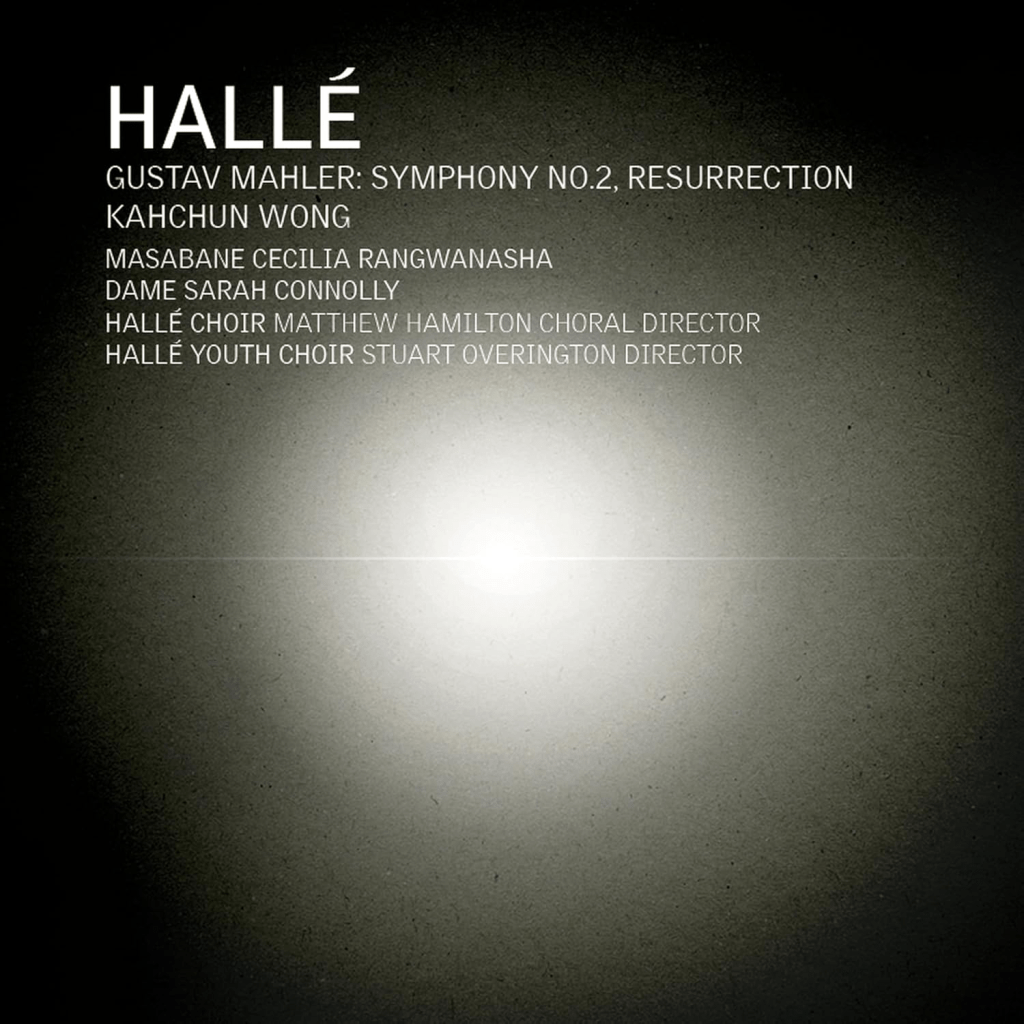
The final entry in this roundup of Hallé Choir recordings was released at around the same time as the Gerontius recording, such that the reviews of the two recordings overlapped in the music press. It was the first recording the Hallé Choir had done with the new Principal Conductor of the Hallé, Kahchun Wong, who had taken over from Mark Elder at the beginning of the 2024/25 season.
In a previous post I wrote about the choir’s relationship with Mahler’s Second Symphony, the so-called ‘Resurrection’ symphony, in the light of Kahchun’s first concert performance of the symphony with the orchestra and choir in January 2025. As I reported, the concert received hugely positive reviews. What I did not mention was that the concert and the rehearsals that preceded it were recorded with the intention of releasing it on the Hallé label. Normally, there would have been no issue with this approach. The Hallé method of taking a live recording and patching it with sections from the rehearsals where necessary was tried and trusted and had produced some impressive releases. The problem here was that Masabane Cecilia Ranwanasha, the soprano soloist, was stranded in Europe and did not make it to Manchester until the day of the concert. This meant that there were no rehearsal recordings available of her singing with the choir in the crucial sung finale of the piece that could be used to patch the live recording. Masabane had a run through the quiet opening to the choral section with the choir before the performance, but the rest was left to fate.
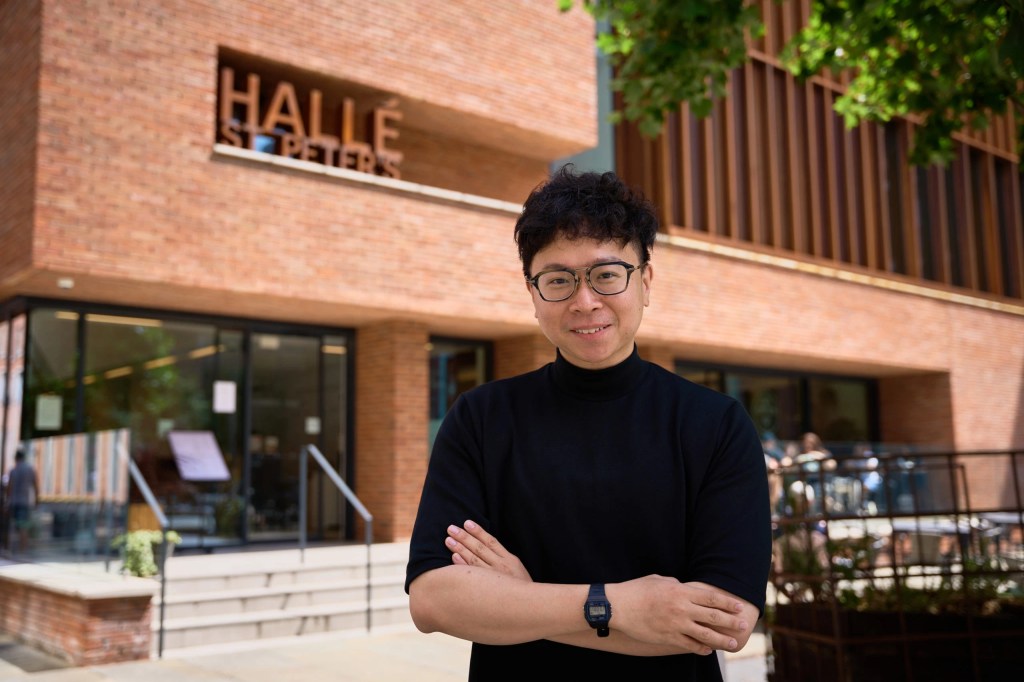
In the event, it worked, at least as far as the audience in the hall for the concert was concerned, as was shown by the reviews at the time.
However, when it comes to reviewing a recording of a piece rather than a performance, as David McConnell wrote in his online review of the recording in The Classic Review: ‘There are over 200 available recordings of Mahler’s Symphony No. 2 (“Resurrection”), and here are two more [he was also reviewing Simone Young’s Sydney Symphony Orchestra recording], played by orchestras that have rarely recorded Mahler.’ In any review, therefore, this recording was up against the very best. Therefore, while McConnell praises the engineering and production (‘consistently excellent’), he felt the first movement to feel ‘lethargic and drawn out, lacking the sustained intensity of Bernstein, Tennstedt and Rattle’. He preferred the ‘quieter, more inward moments’, and especially loved the ‘characterful playing’ in the Scherzo. As for the choral finale, he wrote that ‘the flute’s Nightingale is ravishing, as is the choir’s first entrance’, but he felt that Masabane’s first entry failed to match this. His conclusion highlights the problem as he saw it: ‘Had I attended either concert, I would have left pleased and excited. But, for repeated listening at home, neither performance reaches the excellence of recordings by Bernstein, Tennstedt, Rattle, Klemperer, Fischer and Mehta’.
Malcom Hayes, writing in BBC Music Magazine, was much more forgiving, awarding the recording four stars. While he felt that Kahchun didn’t quite capture the ‘Austrian lyrical Romanticism’ of the piece he also thought he linked ‘the music’s tumultuous sequence of ideas in a way that’s impressive and convincing’. Masabane was praised for her ‘memorable way of rising to and conveying the musical movement’, and ‘a major plus… is the Hallé’s stellar orchestral playing, with solo and choral singing to match’.
Finally, in MusicWeb International Ralph Moore found issues with both soloists but very much appreciated the ensemble sound that Kahchun Wong had achieved and the contribution of the Hallé and Hallé Youth Choirs: ‘His choir is wholly up to sustaining his slow tempo, singing with exceptionally youthful vibrancy’, and he conceded that despite his concerns that there was ‘much to enjoy in this impressive performance’.
This is of course not the end of the Hallé Choir’s recording history. There are some projects already record that will be released in due course and at least one project planned for the future. By my reckoning, the choir have appeared on 44 different recordings – it may not be too long before we reach the half century.
We will see in my next post how, with a different cast of soloists, Kahchun impressed the BBC Proms audience just as much as he had impressed the Bridgewater Hall audience, as I bring the Hallé Choir’s Proms history up to date.
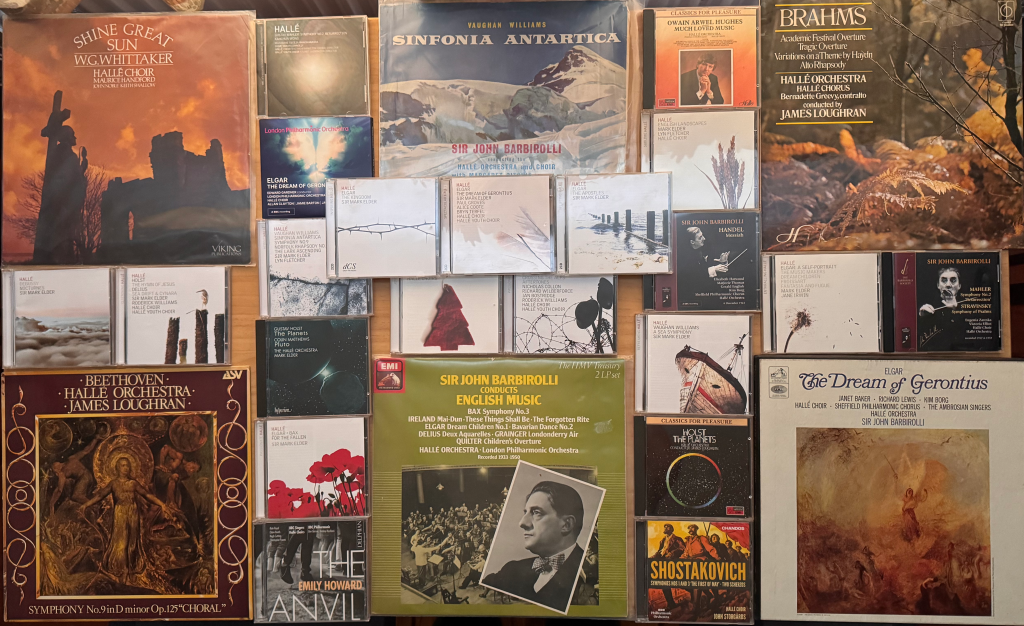
Appendix – Hallé Choir recordings as at May 2026
References
Anon, “Shostakovich and His Heroes”, Hallé magazine (January 2006).
Julian Barnes, The Noise of Time, (London: Jonathan Cape, 2006).
Terry Blain, “Elgar: The Dream of Gerontius”, BBC Music (February 2026).
Andrew Clements, “Shostakovich: Symphonies Nos 1 & 3; Two Scherzos album review – deft execution of the Russian’s early exuberance”, The Guardian (7th August 2025).
Jeremy Dibble, “Elgar: The Dream of Gerontius, Op 36”, The Gramophone (January 2026).
Dave Fanning, liner notes for Chandos CD CHAN 20398, (Chandos, 2025).
Marina Frolova-Walker, “Shostakovich Symphonies Nos 1 & 3. Scherzos [Storgårds]”, The Gramophone (September 2025).
Philip Harrison, “Shostakovich: Symphonies 1 & 3 (Chandos)”, MusicWeb International (9th September 2025). https://musicwebinternational.com/2025/09/shostakovich-symphonies-13-chandos/
Malcolm Hayes, “Mahler: Symphony No. 2 in C minor, ‘Resurrection’”, BBC Music (December 2026).
David A. McConnell, “Double Review: Mahler – Symphony No. 2 (“Resurrection”) – Kahchun Wong, Simone Young”, The Classic Review (17th November 2025). https://theclassicreview.com/album-reviews/double-review-mahler-symphony-no-2-resurrection-kahchun-wong-simone-young/#google_vignette
Ralph Moore, “Gustav Mahler (1860-1911) Symphony No. 2 in C Minor ‘Resurrection’”, MusicWeb International (12th October 2025). https://musicwebinternational.com/2025/10/mahler-symphony-no-2-halle/
Clive Paget, “Elgar: The Dream of Gerontius album review – Gardner and the LPO’s reading is bold and dramatic”, The Guardian (21st November 2025).
John Quinn, “Sir Edward Elgar (1857-1934)
The Dream of Gerontius, Op 36 (1900)”, MusicWeb International (9th November 2025). https://musicwebinternational.com/2025/11/elgar-the-dream-of-gerontius-lpo/

 Home
Home 
Leave a comment