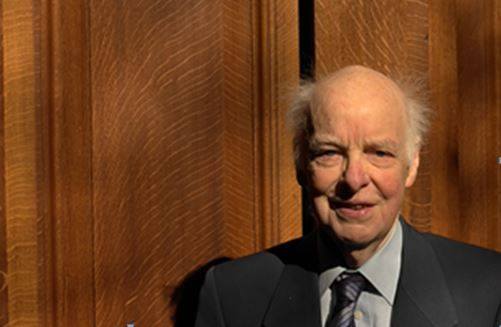
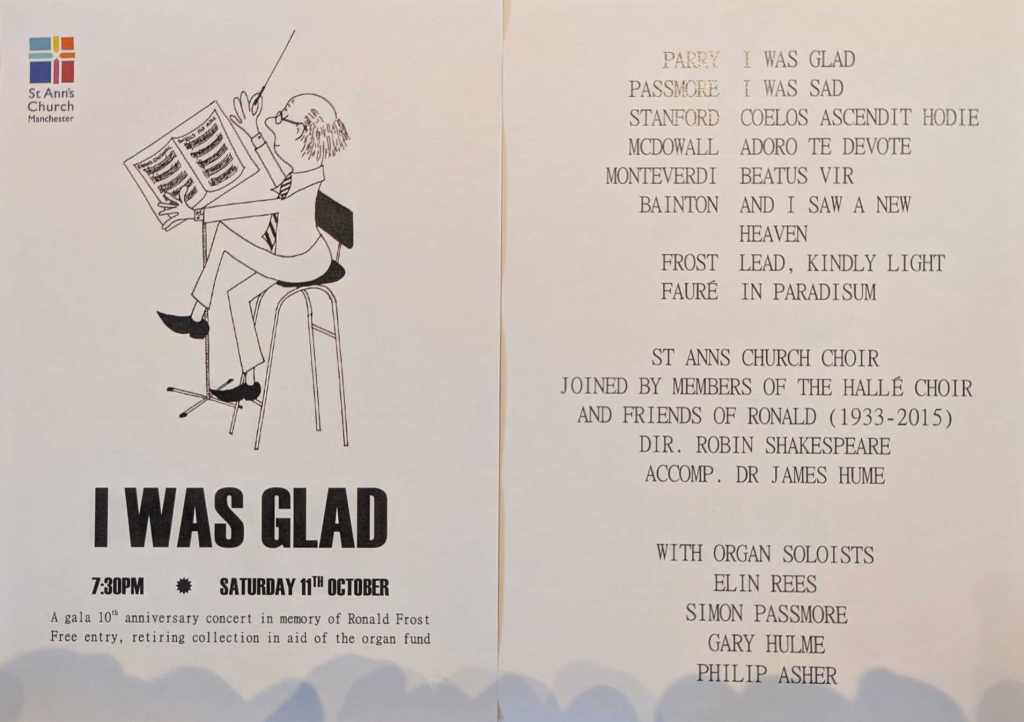
In October 2025 a concert was given at the historic St Ann’s Church in the heart of Manchester to celebrate the life of one of the city’s most beloved musical characters who had passed away 10 years before. That man was Ronald Frost, known to all and sundry simply as ‘Ronnie’. I have mentioned him many times in passing in the course of writing these posts, but although I never personally knew him, I know from talking to many of those who did how much he was beloved. This concert was given by the choir of St Ann’s Church, where he had been organist for 37 years, and members of the Hallé Choir, with whom he had an association for 36 years, first as an accompanist and then for 20 years as Chorus Master. Nobody I have spoken to has a bad word to say about him. It is probably no exaggeration to say that he was instrumental in helping give the Hallé Choir the national profile it has today, in the many recordings he prepared the choir for, in its frequent television appearances, but mostly his insistence on producing a consistent ‘Hallé Choir’ sound whilst making rehearsals fun.
There is much more to him than that though: proud son of Bury who never moved away from his roots and his beloved Bury FC, boy prodigy, student and later influential professor at what is now the Royal Northern College of Music and virtuoso organist with many recordings and arrangements to his name. Over the course of two blog posts I will chart first his early career leading up to his appointment as Chorus Master of the Hallé Choir and then his time with the choir.
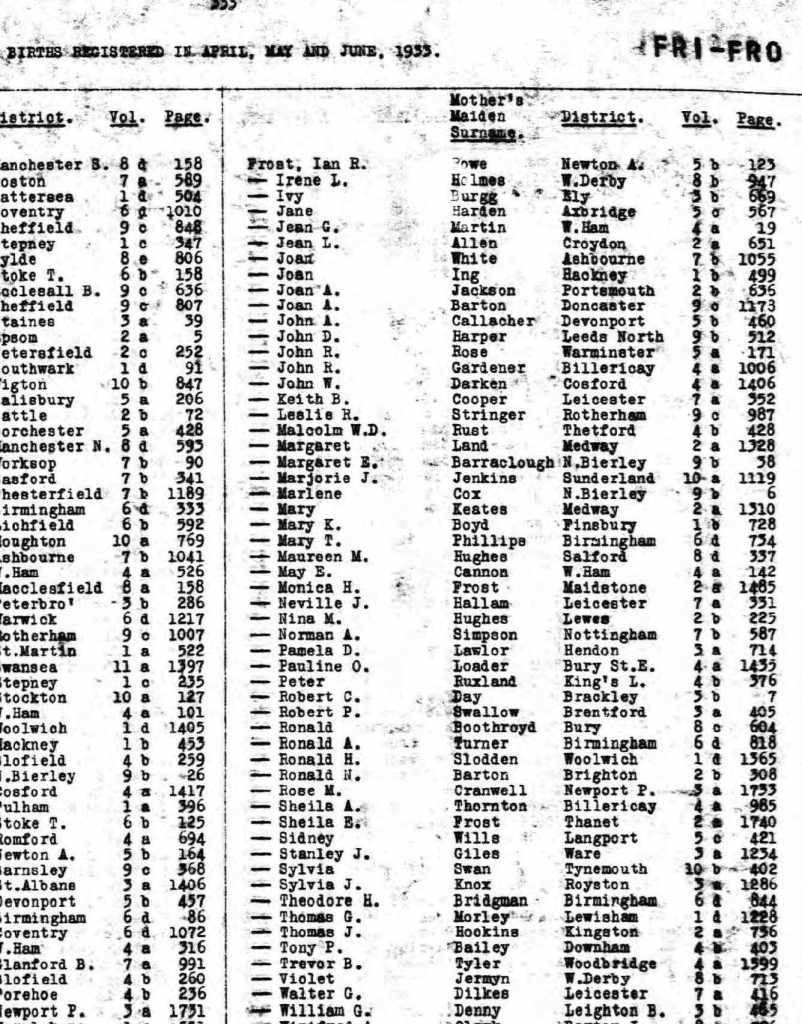
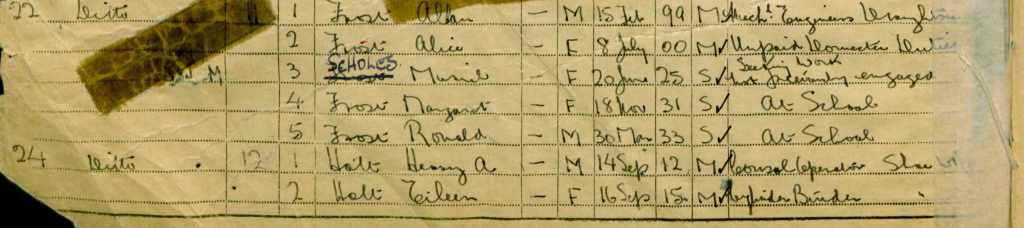
Ronald Frost was born in Bury on 30th March, 1933 to 34 year old Allan Frost, a Mechanical Engineer Draughtsman and 32 year old Alice (née Boothroyd). They already had two daughters, namely Muriel, born in 1925 and Margaret, born two years before Ronnie in 1931. Importantly, Allan was also organist and choirmaster at a local Methodist church.

Whilst I have not been able to ascertain where they were all living when Ronnie was born, the snap census taken just after the outbreak of the Second World War in 1939 shows them living at 22 Deacon’s Crescent, a modest semi-detached house in Tottington, a suburb to the north west of Bury city centre.
He lived there through the war as can be seen from the address being quoted in a couple of press reports in the Manchester Evening News that demonstrate that his musical talents developed exceptionally early. Those talents, no doubt instilled in him initially by his father, will have been encouraged at Bury Grammar School, which he began attending in 1944. Founded in the 16th century, this is now a private school but in 1944 had just achieved ‘direct grant’ status, through which the fees of many of the boys would have been paid by the local authority. It is therefore likely that Allan and Alice did not have to pay for their son’s education.
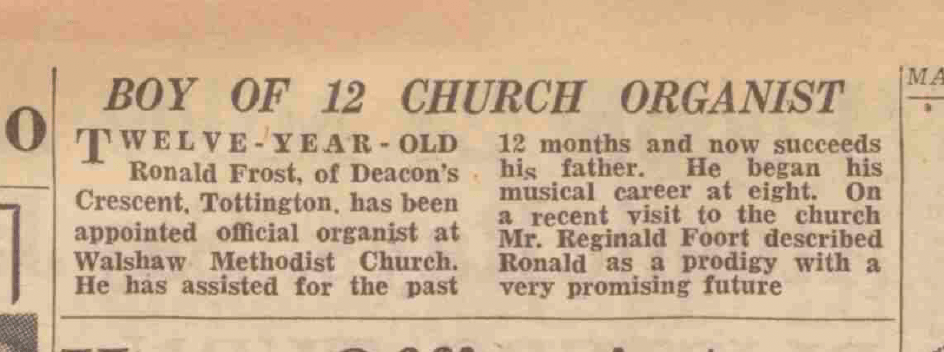
The first report in the Manchester Evening News, from 24th August 1945, shows that at the age of only 12 Ronnie had developed skills as an organist sufficient to be given an official position as organist at Walshaw Methodist Church. His talent was such that celebrity cinema organist Reginald Foort felt moved to describe him as ‘a prodigy with a very promising future.’
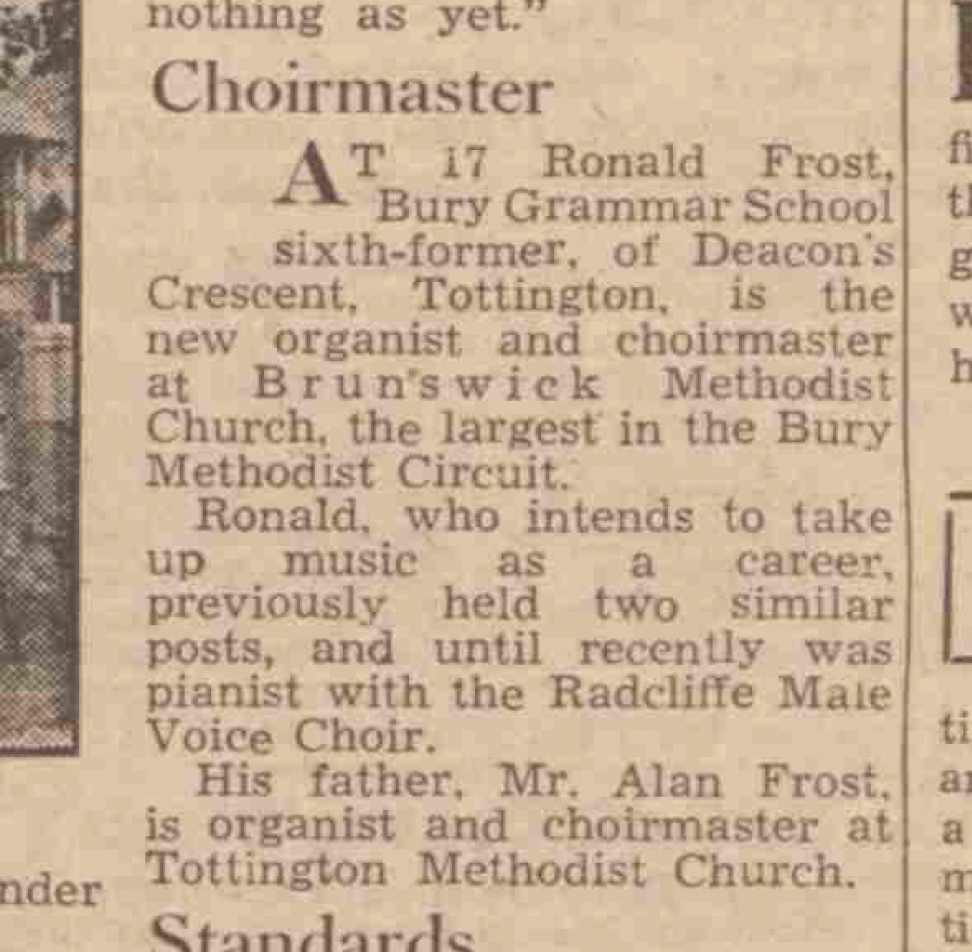
Truer words had never been spoken, especially when we read in the same newspaper five years later that Ronnie, aged 17 and still in the sixth form at Bury Grammar School, had advanced to become both organist and choirmaster at Brunwick Methodist Church, ‘the largest in the Bury Methodist Circuit’. It also reports that this was the third such appointment he had held, and in addition that he had served as the accompanist for the Radcliffe Male Voice Choir. The foundations for his future career had been well and truly set.
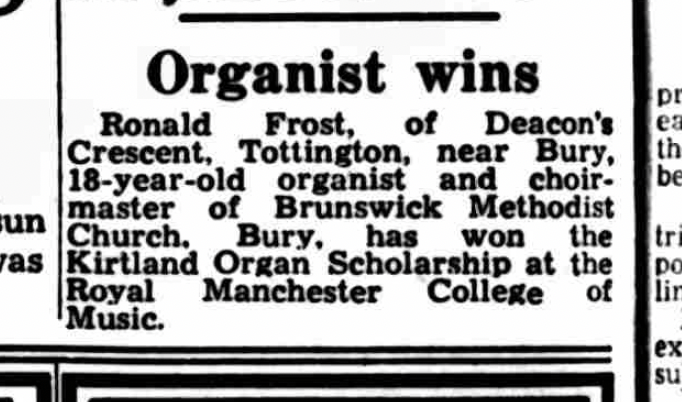
These foundations were to be further cemented in place a year later when the Manchester Evening News reported that Ronnie had won a prestigious organ scholarship at the Royal Manchester College of Music, the forerunner of the Royal Northern College of Music. He would study organ with Harold Dawber, thus bringing him into the orbit of the Hallé given that Dawber was a former director of the Hallé Choir. He was to be associated with the RNCM for the rest of his life.
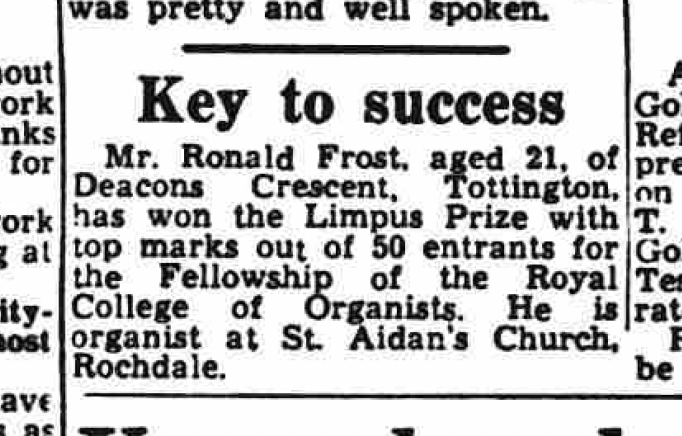
He made rapid progress, being elected an Associate of the Royal College of Organists (ARCO) in 1952 and a Fellow (FRCO) in 1955. As a measure of his ability, for achieving top marks amongst the 50 candidates for the FRCO award that year he was awarded the Limpus Prize, named after Richard Limpus who founded the Royal College of Organists in 1864. He was still only 21. Note also in the report of the award that Ronnie is now shown as being the organist of St. Aidan’s Church, Rochdale. Although coming out of the Methodist tradition, from now on his ecclesiastical associations were with the Church of England.
Ronnie’s formal association with the Hallé Concerts Society began one year later in 1956, when as well as being appointed Principal Organist of the orchestra he also became the official accompanist of the Hallé Choir, working under Chorus Master Herbert Bardgett.
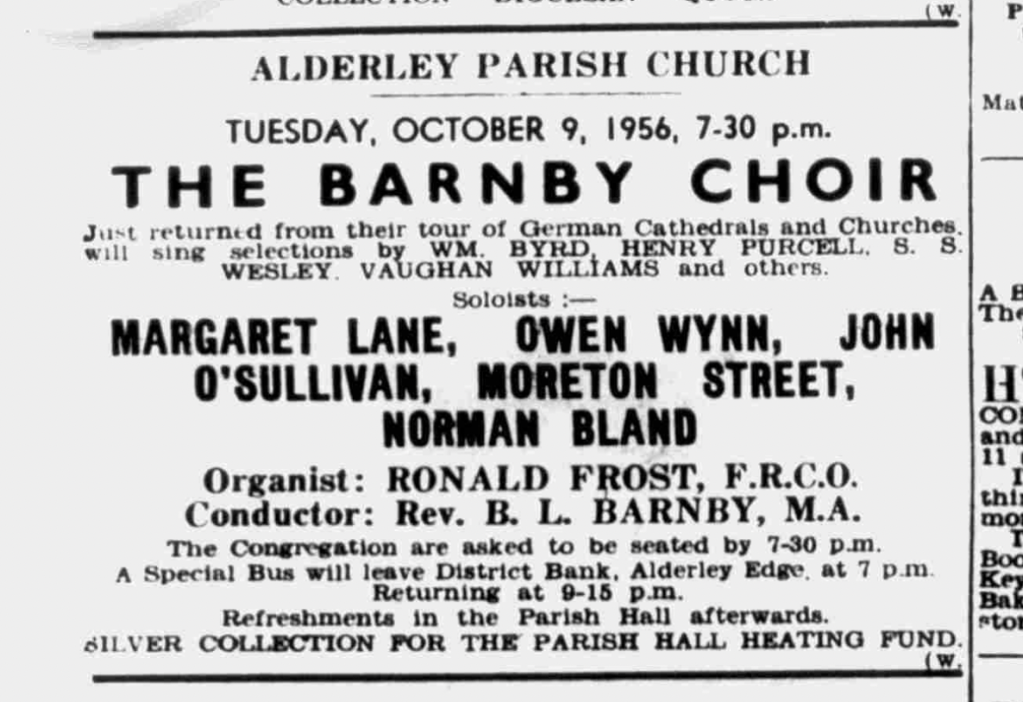
While working with the Hallé Choir in this capacity, he was also expanding his connections with the choral community of the Greater Manchester area beyond the Methodist choirs with which he had been initially associated. Initially we see him appearing as the organist in choral concerts. For example, in December 1954 the Manchester Evening News reports on a performance of Messiah given in the Houldsworth Hall by the Manchester Philharmonic Society accompanied by the string orchestra of the Northern School of Music and ‘the able support of Ronald Frost at the organ’. An advertisement in the Alderley and Wilmslow Advertiser in October 1956 for a mixed concert by the Barnby Choir featured ‘Ronald Frost F.R.C.O.’ as the organist. The Barnby Choir began as a collection of singers who would rehearse under the baton of the Revd. Bertie Barnby who was on the staff at Manchester Cathedral. When Barnby moved to a parish in Rochdale the ‘Barnby Choir’ moved with him and began an association with Ronnie as their favoured organist.
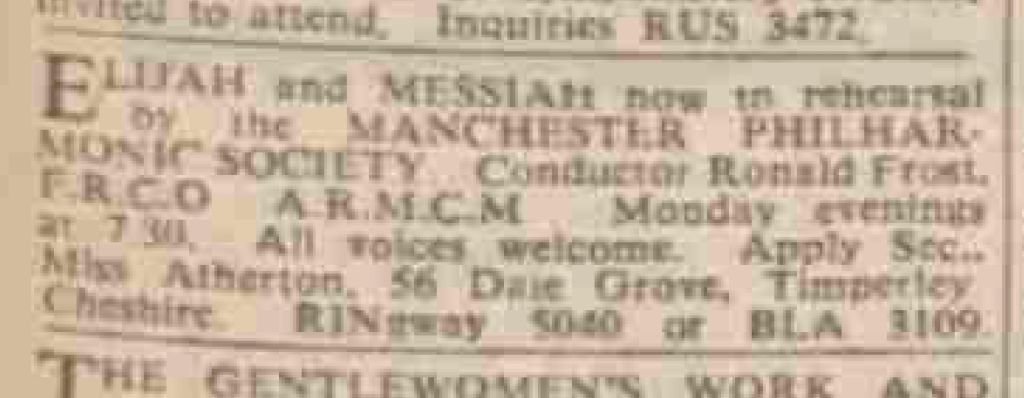
By 1958 we see Ronnie being associated as conductor with two local amateur choirs. The Maia Choirs had been founded in Stockport in 1902 by the chemist Thomas Kay, a later JP and Mayor of that town. He was keen to establish a series of choirs of all ages to foster the development of singing within the town. Harold Dawber became their Director of Music in 1929 and the choir appeared frequently with the BBC Northern Orchestra. When Dawber died Geoffrey Barber took over and was joined by Ronnie whose job was specifically to look after the Maia Boys’ Choir, a job he undertook for the next five years. In addition, via an advertisement in the Manchester Evening News in 1958 we see that Ronnie was now also conductor of the Manchester Philharmonic Society who were inviting new members for future performances of Elijah and Messiah.
Ronnie’s academic career was also progressing at this time. At the same time he was being awarded his FRCO in 1956 he was appointed Tutor in Organ Studies at the Royal Manchester College of Music. 12 years later in 1968 he succeeded John Wray as Director of Studies. Further progression would follow in what would eventually be a continuous 50 year association with the college.
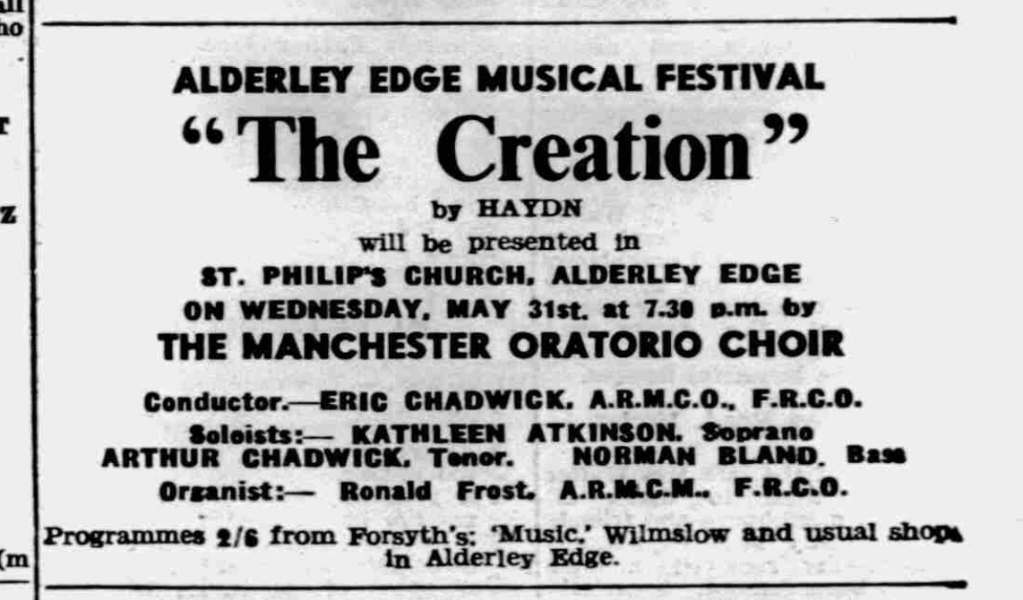
As we move in the sixties, we can see his future path being set. Another advertisement in the Alderley and Wilmslow Advertiser in May 1961 for a performance of Haydn’s Creation by the Manchester Oratorio Choir showed Ronnie as the organist. The conductor was Eric Chadwick who had now succeeded Herbert Bardgett as Chorus Master of the Hallé Choir and was therefore a person Ronnie worked with on a weekly basis. Evidence of his growing fame as a choral conductor is shown by the fact that the Skelmersdale Reporter felt moved to report in July 1963 that, rather in the manner of a school inspection:
Members of Skelmersdale Parish Church choir are expecting a visit at their practice next Thursday from MR. RONALD FROST, who teaches at the Manchester Royal College of Music and is organist and choirmaster at Stretford Parish Church. Mr. Frost is also connected with the Royal School of Church Music, which is doing a great deal to improve the standard of music of worship.
Report in the Skelmersdale Reporter, 11th July 1963
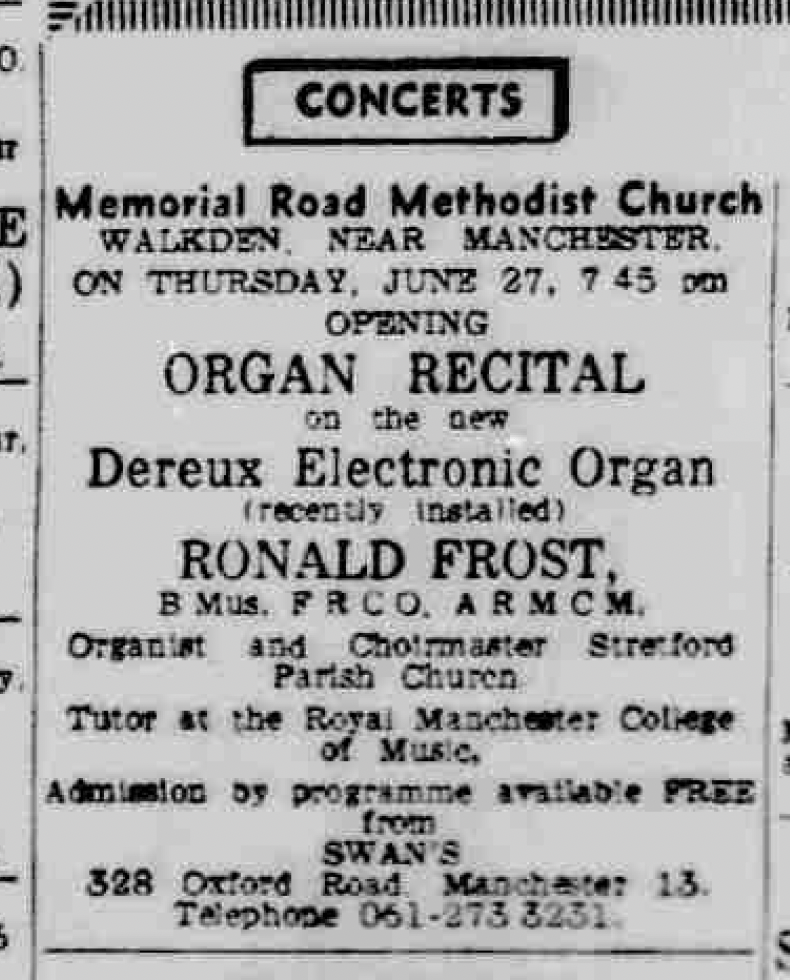
Note that Ronnie had by now moved to a new church position in Stretford. This was not to be his final church appointment, as we will see in the next blog post. His connections with the Methodist Church had not ceased, however, as we see from an advertisement in June 1968 for a recital by ‘Ronald Frost, B Mus, FRCO, ARMCM, Organist and Choirmaster Stretford Parish Church, Tutor at the Royal Manchester College of Music’ on ‘the new Dereux Electronic Organ (recently installed)’ at the Memorial Road Methodist Church in Walkden.
A report in the Liverpool Echo in May 1967 provides two further pieces of information about Ronnie’s Hallé career. It details a concert given in Hope Parish Church in Liverpool of a concert by the ‘Longford Singers’ in aid of the church appeal. The singers were conducted by ‘Mr Ronald Frost, deputy chorus master of the Hallé Choir, and Professor of Organ Music at the Royal Manchester College of Music’, indicating that as well as being accompanist he was now the official deputy to Eric Chadwick. Furthermore, the Longford Singers were described as follows:
A small group of keen musicians drawn mainly from one of Manchester’s most famous choirs who meet regularly and give concerts free of charge for the sheer joy of making music together.
From a report in the Liverpool Echo, 15th May 1967
One can only assume the ‘famous choir’ is the Hallé Choir, and that Ronnie is gaining extra-curricular experience of conducting them!
October 1969 saw a further significant moment with the Hallé Concerts Society announcing the appointment of Raymond Thorpe, music adviser to Derbyshire County Council, as Chorus Master of the Hallé Choir. Whether Ronnie was in running for this position, given the experience he had built up over 13 years with the choir, I do not know, but I would imagine there was some disappointment, especially given Thorpe was only in his late thirties and therefore likely set for a long tenure in charge of the choir.
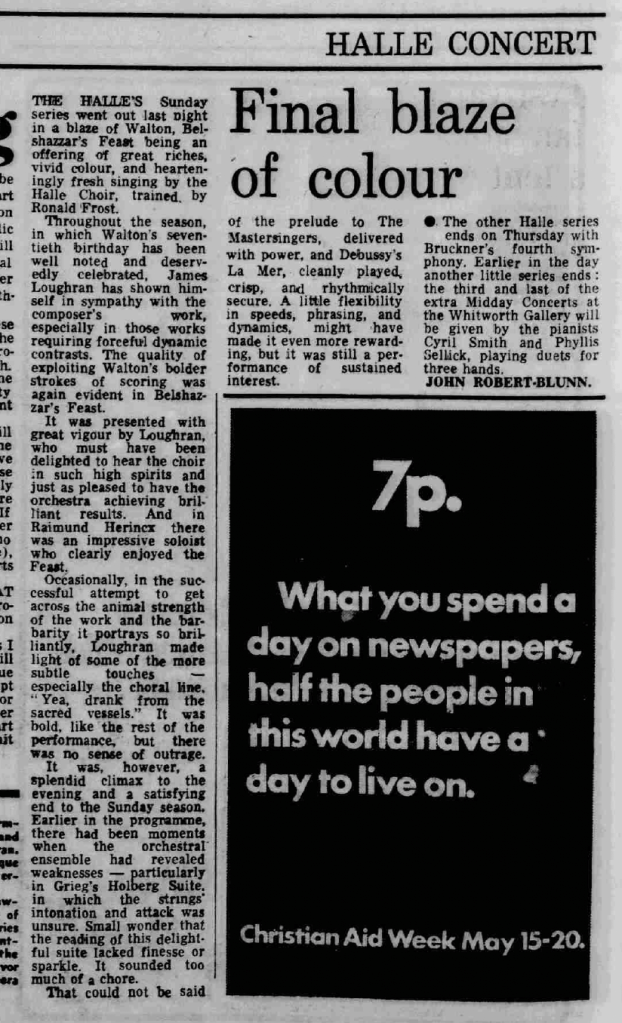
As it happened, fate intervened. A Manchester Evening News review by John Robert-Blunn of a Hallé performance of Walton’s Belshazzar’s Feast in May 1972, conducted by James Loughran, notes that the Hallé Choir were trained by Ronald Frost, and what is more that the performance was ‘an offering of great riches, vivid colour, and hearteningly fresh singing by the Hallé Choir’.
The reason for Ronnie’s appearance as choir trainer became apparent in a report in the same newspaper a couple of weeks later. Entitled ‘Picked to lead’ it reported that ‘after three hectic months of standing in, Ronald Frost is to be the Hallé Choir’s new chorus-master.’ He had taken over as caretaker in March when Thorpe had resigned from the position on medical advice. The article includes an interview with Ronnie in which he very much sets out his stall for his future work with the choir:
To demand loyalty from a choir member, you’ve got to show loyalty yourself’, says Mr Frost, who reckons a man in his shoes must also have a sense of humour, complete commitment and the patience of Job, though not necessarily in that order.
From a report in the Manchester Evening News, 29th May 1972
As we will see in the next post, these were all elements he brought to the job, and these are evidenced in the final paragraphs of the report, which describe an encounter Ronnie had, as the choir accompanist, with John Barbirolli, and with which I will end this part of the Ronald Frost story:
There was the time when Frost’s score and JB’s score disagreed. JB: “You’re playing the wrong notes.” Frost: “No, I’m not.” JB: “Yes, you are.” Frost: “No, I’m not.” After a friendly bit of argument, JB whipped out a huge pencil and scribbled in Frost’s score the notes he wanted him to play. “There,” he said, “that’s better.” Though whether Mahler, the composer, would have agreed is another matter.
ibid.
References
The research tools used were:
Ancestry ancestry.co.uk via Cheshire Libraries
British Newspaper Archive britishnewspaperarchive.co.uk
Extra information
Anon, ‘In Tribute: Ronald Frost 1933 – 2015’, RNCM, 29th October 2015. https://www.rncm.ac.uk/news/in-tribute-ronald-frost-1933-2015/
Anon, ‘Our History – The Maia Choirs’, The Maia Singers, undated. https://themaiasingers.co.uk/home/our-history/
Anon, ‘The Barnby Choir – History’, The Barnby Choir, undated. https://thebarnbychoir.co.uk/history/
Stephen Shaw, ‘Organ Music of Ronald Frost’, undated. https://stephen.shawweb.co.uk/frost/ronaldfrost.html
Kenneth Shenton, ‘Ronald Frost’, Church Times, 19th February 2016. https://www.churchtimes.co.uk/articles/2016/19-february/gazette/obituaries/ronald-frost
David Thomson, ‘Death of well-known Greenmount musician Ronald Frost’, Bury Times, 2015. https://www.burytimes.co.uk/news/13808533.death-of-well-known-greenmount-musician-ronald-frost/
 Home
Home 
Leave a comment